What Eat App Is Built to Do
Eat App is a cloud-based reservation and guest management platform headquartered in the Middle East, with a strong footprint in Dubai, Bahrain, and surrounding markets. It is genuinely well-built software; polished, feature-rich, and trusted by restaurants across the Gulf region and beyond. It handles table management, CRM, commission-free online bookings, WhatsApp integrations, and marketing automation, and has built a reputation for responsive customer support.
Eat App competes in the same category as OpenTable and SevenRooms: platforms that help restaurant operators manage reservations and guest relationships effectively. It recently expanded into India through the acquisition of ReserveGo, signaling clear ambitions in emerging markets.
For what it is — a reservation and guest management system — Eat App is a strong product. But for African hospitality operators who need a platform that captures demand, converts it into revenue, and builds the kind of repeat guest engine that drives long-term growth, Eat App was not designed to fill that role.
What Dinesurf Is Built to Do
Dinesurf is the Guest Growth operating system for hospitality brands. That’s not a tagline, it’s a description of the commercial function the platform serves.
Founded in Lagos in 2021, Dinesurf was built specifically for the African hospitality market. It connects restaurants, lounges, nightlife venues, and experience-led operators to a system that does five things in sequence: captures guest demand, converts that demand into paid bookings, builds deep guest intelligence, automates retention, and helps operators take back control of their revenue from third-party platforms.
Every feature in the product exists to serve one of those five outcomes. The branded website builder is a demand capture tool. The reservations and deposits system is a conversion infrastructure. The CRM and guest profiles are intelligence. The WhatsApp, SMS, and email automation are retention. The direct booking channels and no-commission delivery are revenue control.
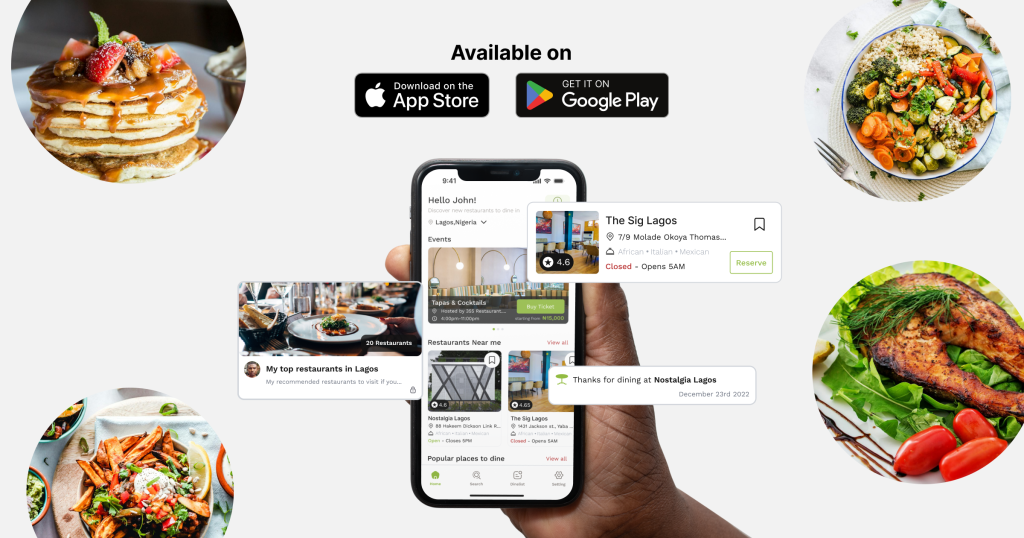
Dinesurf also operates a consumer-facing dining discovery app with over 22,000 monthly users searching for restaurants across Africa — meaning operators don’t just get software, they get access to a local diner audience that is already looking for where to eat.
The Problem with Reseller Software in Africa
When a globally built platform enters an African market, it rarely arrives as a product that was designed for that context. It arrives as-is — built for a different economic environment, different infrastructure conditions, and a different understanding of what hospitality operators actually need. Here’s where that creates real problems:
- Pricing that doesn’t fit the market
Eat App’s plans start at around $129–$149 per month, priced for markets with stronger currencies and higher average revenues per cover. For a restaurant in Lagos or Nairobi managing against naira or shilling volatility, a dollar-denominated subscription becomes financially unpredictable month to month. Dinesurf offers a free plan and flexible paid tiers structured for the African market economics, so operators aren’t paying for a platform calibrated to Dubai margins.
- Infrastructure that wasn’t built for here
Global software assumes reliable internet connectivity, plug-and-play POS integrations, and front-of-house teams that are already digitally confident. African restaurants often operate in environments where those assumptions don’t hold. A platform that doesn’t account for this adds friction instead of removing it. Dinesurf was built from the ground up with these realities in mind.
One of the most consequential gaps in using a foreign-built platform is that it brings no African diner audience with it. Eat App’s integrations with Google and Instagram are useful, but they connect operators to a generic global network, not to the specific audience of African diners searching for restaurants in African cities. Dinesurf’s consumer app closes that gap directly. That’s the difference between renting distribution from someone else’s network and building your own demand engine.
- Support without local context
When service breaks down mid-shift on a Saturday night, operators need support from a team that understands their context, not just their software. Time zone gaps, unfamiliarity with local market dynamics, and the absence of on-the-ground presence all slow resolution when things go wrong. Dinesurf’s team is local, operates in the same time zones, and built the product with African operators at the table.
- Data that reflects someone else’s market
Guest intelligence is only valuable when it reflects the behavior of your actual guests. Global platforms generate analytics calibrated to the dining patterns and preferences of their primary markets. The insights that matter in Cape Town, Lagos, or Nairobi are not the same as those that matter in Dubai. Dinesurf’s CRM and reporting are built to surface the right signals for African hospitality operators — making the data genuinely actionable rather than decorative.
A Fair Comparison
Both platforms share meaningful common ground. Dinesurf and Eat App both offer commission-free reservations, WhatsApp integration, and guest CRM — the baseline capabilities any modern hospitality operator expects. Both operate consumer-facing discovery apps, though Eat App’s audience is concentrated in the Middle East while Dinesurf’s is actively growing across African cities.
The differences, though, point to a fundamental divergence in what each platform is trying to achieve. Eat App helps operators manage reservations and guest relationships — and it does that well. Dinesurf helps operators build the full guest revenue system: capturing demand, securing it through conversion infrastructure, deepening it through guest intelligence, and compounding it through retention automation and direct revenue channels.
Eat App does not offer no-commission delivery — a meaningful gap in markets where third-party delivery platforms extract significant margin. Dinesurf does. On pricing, Dinesurf offers a free entry point and local currency flexibility; Eat App’s pricing is anchored in US dollars with no free tier. And at the most strategic level, Dinesurf is designed around the specific commercial growth challenges of African hospitality operators. Eat App is not.
Which Platform Is Right for You?
If your restaurant is in the Middle East and you’re looking for a polished, globally recognized system with a strong regional track record, Eat App is a credible choice. It’s a well-made product that manages what it’s designed to manage.
But if you’re running a restaurant, lounge, nightlife venue, or experience-led hospitality business in Africa — and your real challenge is not just managing bookings but growing guest revenue, building a direct relationship with your guests, and reducing your dependence on platforms that own your customer data — then you need something built for that work and that is where DInesurf comes in. That’s not a feature gap. It’s a strategic one. And for hospitality brands in Africa who are serious about growth, it’s the gap that matters most.
About Dinesurf
Dinesurf is the Guest Growth OS for hospitality brands across Africa.
We help restaurants, lounges, nightlife venues, and experience-led operators attract the right guests, convert demand into paid bookings, and turn first-time visits into repeat revenue — all from one connected system.
We are not just another restaurant software. We are the commercial growth layer built specifically for African hospitality — priced for this market, backed by a local team, and invested in the growth of the continent's dining culture.