There is a particular kind of confidence that comes with running a successful restaurant on gut feeling. You know your regulars by name. You can read a dining room within minutes of walking in. You know instinctively when service is off, when the kitchen is struggling, when a table needs attention before they ask for it. That intuition is real, it is valuable, and it is one of the things that makes a great restaurateur.
But intuition is not a business strategy. And in 2026, the African restaurant industry has reached a point where running on instinct alone is no longer a sustainable competitive advantage. The landscape has shifted too quickly, the guests have changed too much, and the gap between restaurants with systems and restaurants without has grown too wide to ignore.
Here is what is actually happening across African dining right now, and why this year is the inflection point that separates the restaurants that will thrive from the ones that will quietly disappear.
The Guest Has Changed
The African dining guest of 2026 is not the same person who walked into your restaurant five years ago. They are more informed, more connected, and more demanding in the best possible sense. They have eaten at restaurants in London, Dubai, and New York. They follow food content creators who have educated them on what great hospitality looks like. They read reviews before they book, share experiences in real time, and form opinions about a restaurant within the first three minutes of arrival.
This guest does not just want good food. They want a seamless experience from the moment they discover your restaurant to the moment they leave and beyond. They expect to be able to book easily, receive a confirmation without having to follow up, be recognised if they have visited before, and hear from you again after they leave.
When that experience is broken at any point, whether it is a chaotic booking process, a forgotten reservation, or silence after a great meal, they notice. And they remember. Not necessarily with a one star review, though that happens too, but with the quiet decision to try somewhere else next time.
The restaurants that are winning with this new guest are not necessarily the ones with the best food. They are the ones delivering the most consistent, frictionless, personalised experience. And that is almost impossible to do without the right systems underneath.
Competition Has Never Been Tighter
Across Lagos, Nairobi, Accra, Kigali, Johannesburg, and every other major African city, the number of dining options available to guests has expanded dramatically. New restaurants are opening at a pace that would have seemed extraordinary a decade ago. Concepts are becoming more sophisticated. Presentation standards are higher. Marketing is more polished.
This is genuinely exciting for the industry. It signals a growing dining culture across the continent, a rising middle class with disposable income and a taste for quality experiences, and increasing global attention on African cuisine and hospitality.
But it also means that the margin for error has shrunk. When a guest has ten excellent options within a ten minute drive, the difference between them choosing you and choosing someone else is often not the food. It is the experience. The ease of booking. The feeling of being known and valued. The follow-up that reminds them you exist when they are deciding where to go on Saturday night.
Competing on food quality alone is no longer enough. The restaurants that stand out in a crowded market are the ones that have built systems to deliver a consistently superior guest experience, every time, without relying on any single person to hold it all together.
Margins Are Getting Thinner
The economics of running a restaurant in Africa in 2026 are genuinely challenging. Food costs have risen sharply across most markets. Energy costs are unpredictable. Staff costs are increasing as the talent pool becomes more competitive. Rent in the most desirable locations has never been higher.
At the same time, guests are more price sensitive than they appear. They will spend on an experience they value, but they are also more likely than ever to compare options, wait for a reason to visit, or choose to cook at home if the value proposition is not clear.
This squeeze on margins means that waste, inefficiency, and lost revenue are no longer just inconveniences. They are existential threats. A restaurant losing four covers a night to no-shows, spending seven hours a week on manual reservation management, and failing to convert first-time guests into regulars is bleeding money at a rate it may not be able to sustain.
The restaurants that are navigating this margin squeeze successfully are doing one thing differently from the ones that are struggling. They know their numbers. They track their cost per cover, their table turn rate, their average spend per guest, and their repeat visit rate. They make decisions based on data, not instinct, and they have systems that give them that data without requiring hours of manual work.
The Technology Gap Is Widening
Here is the shift that most people in the African restaurant industry are not talking about openly but everyone is feeling. There is a growing divide between restaurants that have adopted the right technology and restaurants that have not, and that divide is accelerating.
The restaurants with systems are getting faster, smarter, and more efficient every month. Their guest databases are growing. Their no-show rates are dropping. Their repeat visit rates are climbing. Their teams are spending less time on admin and more time on hospitality. They are compounding their advantages quietly while everyone else is still managing reservations on WhatsApp.
The restaurants without systems are not standing still. They are falling behind. Every week without a guest database is a week of repeat business that disappears. Every month without automated follow-ups is a month of relationships that go cold. Every year without proper reporting is a year of decisions made on gut feeling that could have been made on data.
The technology gap in the African restaurant industry is not primarily about access. Most of the tools that could transform these businesses are affordable and accessible. It is about the mindset shift required to move from instinct-based management to systems-based management, and the willingness to invest in that shift before a crisis forces the decision.
Why This Year Is Different
Every year someone in the industry says that this is the year things will change. But 2026 genuinely feels different for three reasons.
The first is that the guest expectation gap has become too wide to bridge with charm alone. Guests who have experienced seamless, technology-enabled hospitality elsewhere are bringing those expectations into African dining rooms and noticing the difference when it falls short.
The second is that the competitive landscape has reached a density where differentiation matters more than it ever has. In a market with this many options, the restaurants that do not stand out on experience will struggle to survive on food alone.
The third is that the tools now exist, built specifically for how African restaurants operate, that make the transition from instinct to systems genuinely accessible. This is not about adopting technology designed for a London restaurant and hoping it fits. It is about platforms that understand walk-in culture, mobile payment behaviour, the specific relationship between African restaurants and their guests, and the operational reality of running a dining business on this continent.
What Running on Systems Actually Looks Like
It does not mean removing the human element from your restaurant. The warmth, the personality, the intuition that makes great African hospitality what it is, none of that goes away. Systems do not replace the human experience. They protect it.
When your team is not drowning in manual tasks, they have more energy for guests. When your reservation management is automated, your floor manager can focus on the floor. When your guest follow-ups go out automatically, your regulars feel remembered without anyone having to remember to send the message. When your reports are live and accurate, you can make a pricing decision based on real data in minutes instead of spending a Sunday afternoon with a spreadsheet.
Systems do not make restaurants less human. They make the human parts of a restaurant more sustainable.
The Platform Built for This Moment
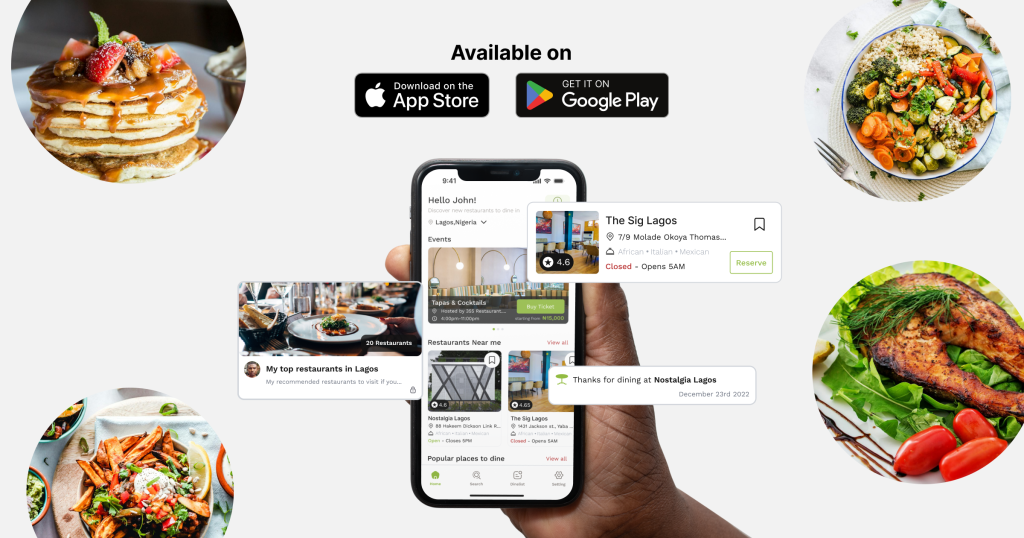
Dinesurf was not built for the African restaurant industry as it was five years ago. It was built for the industry as it is right now, and as it is heading. A platform that handles reservations, builds guest profiles, automates follow-ups, manages tables, and delivers real time insights, designed from the ground up for how dining actually works across Africa.
The restaurants that will look back on 2026 as the year everything changed will not be the ones that had the best food or the best location. They will be the ones that made the decision to stop running on instinct and start building on systems.
That decision is available to you today. Visit dinesurf.com to see what it looks like in practice.
About Dinesurf
Dinesurf is the Guest Growth OS for hospitality brands across Africa.
We help restaurants, lounges, nightlife venues, and experience-led operators attract the right guests, convert demand into paid bookings, and turn first-time visits into repeat revenue — all from one connected system.
We are not just another restaurant software. We are the commercial growth layer built specifically for African hospitality — priced for this market, backed by a local team, and invested in the growth of the continent's dining culture.