The Unique Challenges of Running a Fine Dining Restaurant in Lagos

8 min read | May 7, 2026

Lagos does not do anything quietly. The city is loud, fast, ambitious, and completely indifferent to the idea that things should be simple. If you are running a fine dining restaurant here, you already know this. You did not choose an easy path. You chose one of the most demanding operating environments in the world, inside one of the most exciting food cities on the continent. And you probably would not have it any other way. But that does not mean the challenges are not real. It means they deserve to be talked about honestly, because too much of the conversation around the Lagos restaurant industry focuses on the glamour and not enough on what it actually takes to keep the lights on and the standards high. This piece is about the second part.

Running a fine dining restaurant in Lagos is not just about great food and elegant interiors. It is about surviving and thriving in one of the most complex operating environments on the continent.

The Infrastructure Problem Every Lagos Restaurant Owner Knows

If you trained abroad or built your understanding of fine dining from international restaurants, one of the first things that hit you when you opened in Lagos was the infrastructure. Or more accurately, the lack of it. Power is the most obvious one. Running a fine dining restaurant requires consistent, stable electricity. The cold chain for your ingredients depends on it. Your kitchen equipment depends on it. The ambience you work so hard to create, the lighting, the music, the temperature in the dining room, all of it collapses the moment NEPA takes the light. Generators solve the problem partially, but they introduce their own costs. Diesel is expensive and the price fluctuates. Generator maintenance is an ongoing operational burden. And there is always the moment, usually at the worst possible time, when the generator decides to have a problem of its own. Water supply is another layer of the same story. Restaurants that operate without a consistent water supply are managing a risk that most guests never see but that the kitchen feels every single day. These are not problems that a great chef or a talented manager can solve with skill alone. They are systemic infrastructure challenges that add a layer of cost and complexity to running a restaurant in Lagos that simply does not exist in the markets where most fine dining playbooks were written.

The Ingredient Sourcing Reality

Fine dining is built on the quality of ingredients. The whole promise of the experience is that what lands on the plate is exceptional, and that requires sourcing exceptional produce consistently. In Lagos, consistent is the operative word, and it is the hardest one to guarantee. Local markets offer incredible produce, and some of the best ingredients available in Lagos come from suppliers who have been doing this for decades. But the relationship between a fine dining kitchen and its suppliers requires reliability, and reliability is something you build over time with effort, trust, and sometimes a lot of patience. Imported ingredients add another dimension entirely. Import costs in Nigeria have climbed significantly in recent years. Currency fluctuations affect the price of everything that comes in from outside the country. An ingredient that fits your food cost calculations today may not fit them next month. Menu engineering becomes a constant exercise in balancing culinary ambition with financial reality. There is also the cold chain problem. Certain proteins and dairy products require an unbroken cold chain from source to kitchen. In a city where power supply is inconsistent and logistics infrastructure is still maturing, that chain has more links that can break than it does in other markets. The chefs who thrive in Lagos are the ones who have learned to be creative about sourcing. They build strong relationships with local farmers. They design menus that celebrate what is genuinely available and exceptional here rather than chasing ingredients that were always going to be a logistical headache. They adapt without compromising. That adaptability is actually one of the things that makes Lagos fine dining special. But it takes time to develop, and it costs money while you are figuring it out.

The Guest Expectation Gap in Lagos Fine Dining

Lagos has a sophisticated dining population. There are guests in this city who have eaten at Michelin-starred restaurants in London, New York, and Paris. They know what fine dining looks like at its best, and they bring those expectations with them when they sit down at your table. That is both an opportunity and a pressure point. The opportunity is that there is a real market here for genuinely excellent food and service. Lagosians with disposable income are not looking for a compromise. They want an experience that stands up to anything they have had anywhere in the world, and when you deliver that, the loyalty and word of mouth you earn is extraordinary. The pressure is that you are being benchmarked against restaurants that operate in entirely different conditions. Restaurants in London are not dealing with generator costs and import duty and the logistics challenges that are simply part of operating in Lagos. They are not managing the same staff development landscape or the same supply chain variables. Delivering a world-class experience in Lagos costs more and requires more than delivering one in most other cities. But the guest paying for it is often applying the same mental price anchor they would apply anywhere in the world. Bridging that gap, between what it genuinely costs to operate at the highest level here and what guests expect to pay for it, is one of the quietest ongoing challenges in the Lagos fine dining space.

Staffing Challenges for Fine Dining Restaurants in Lagos

Running a fine dining restaurant requires a specific kind of team. Not just skilled, but trained to a standard that is consistent, polished, and able to deliver an elevated experience under pressure, every service, without exception. Building that team in Lagos is genuinely hard work. Hospitality as a career path has historically been undervalued in Nigeria. The perception that working in a restaurant is a stepping stone to something else rather than a profession worth investing in creates a talent pipeline that is thinner than it should be. There are exceptional people working in Lagos restaurants, talented chefs, attentive service staff, knowledgeable sommeliers. But finding them, training them to your specific standard, and then retaining them is a constant effort. Retention is particularly challenging. The best people in your kitchen and on your floor know their worth. They will be approached by competitors. They will be tempted by the idea of working abroad. They will leave if they do not feel developed, valued, and invested in. And when they leave, they take with them not just their skill but the institutional knowledge that took months or years to build. The restaurants in Lagos that have cracked this are the ones that treat staff development as seriously as they treat menu development. They invest in training. They create clear paths for growth. They build a culture that people want to be part of, not just a workplace people tolerate until something better comes along. That investment pays off, but it requires a long-term mindset that is hard to maintain when you are also managing a hundred other operational pressures at once.

The Economic Volatility Factor

Running any business in Nigeria requires a tolerance for economic uncertainty that would make most operators in more stable markets deeply uncomfortable. The naira has experienced significant pressure over the past several years. Inflation has pushed up the cost of almost everything a restaurant buys, from ingredients to utilities to disposables. For a fine dining restaurant, where the cost structure is already high and the margins are already tight, economic volatility is not just an inconvenience. It is a genuine threat to viability. Pricing a menu in this environment is a complex exercise. Price too low and you are slowly running out of money with every cover you serve. Price too high and you price out guests who were already stretching to eat with you. Adjust prices too frequently and guests feel unsettled. Do not adjust them often enough and your food costs creep above where they need to be. There are no clean answers here. The operators who manage it best are the ones who build flexibility into their menus and their cost structures, who watch their numbers closely, and who make decisions proactively rather than waiting until they are already in trouble.

Why Running a Fine Dining Restaurant in Lagos Is Still Worth It

Everything above is real. The infrastructure, the sourcing, the staffing, the economics, none of it is easy, and anyone who tells you otherwise has not been paying attention. But here is what is also real. Lagos is one of the most exciting cities in the world to run a restaurant right now. The dining culture here is evolving at a pace that is genuinely remarkable. There is a generation of Lagos diners who are curious, engaged, and hungry for exceptional experiences. There is a growing community of chefs and hospitality professionals who are building something genuinely world-class here, not as a copy of somewhere else, but as something authentically rooted in this place. The restaurants that are thriving in Lagos are the ones that have stopped waiting for the conditions to be perfect and started building exceptional experiences within the conditions that exist. They have developed systems that manage the complexity. They have built teams that are resilient and well-trained. They have found suppliers they trust and menus that reflect what Lagos actually has to offer rather than what they wish they could source. They have also, perhaps most importantly, built real relationships with their guests. In a city where there is always something new to try, the restaurants that endure are the ones that make guests feel genuinely connected. Not just satisfied after a meal, but loyal in the kind of way that brings them back and makes them bring their friends. That is what fine dining in Lagos, at its best, is capable of. And that is worth working for.

A Final Word for Restaurant Owners in the Thick of It

If you are running a fine dining restaurant in Lagos right now and some days feel impossibly hard, that is not a sign that you are doing it wrong. It is a sign that you are doing something genuinely difficult in a market that does not make it easy. The challenges here are real. But so is the opportunity. And the operators who figure out how to navigate the former tend to find that the latter is bigger than they imagined.

Keep going. Fine dining in Lagos rewards the operators who refuse to cut corners. Build better systems. Invest in your people.

Know your guests. And do not let the noise of the city convince you that what you are building does not matter. It does.

About Dinesurf

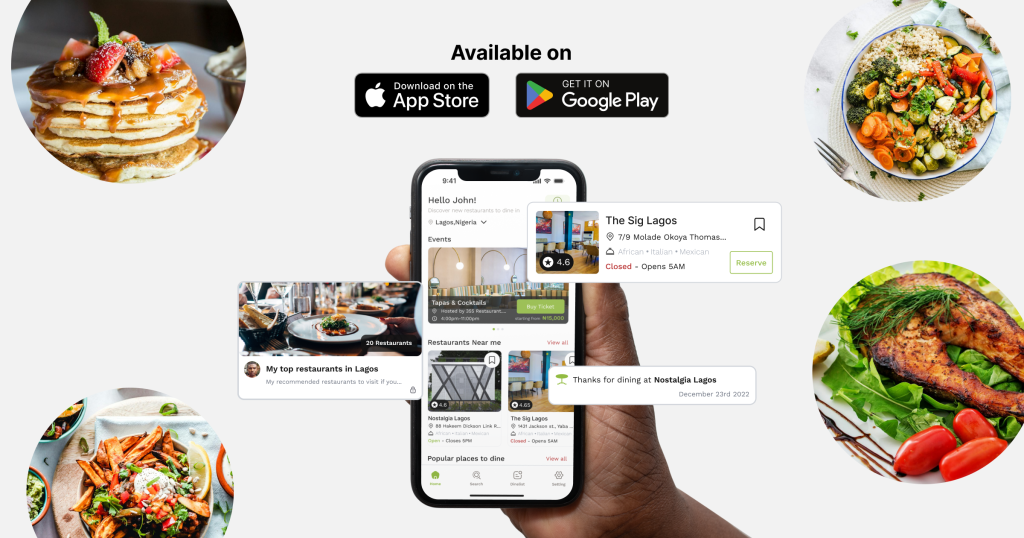
Dinesurf is the Guest Growth OS for hospitality brands across Africa.

We help restaurants, lounges, nightlife venues, and experience-led operators attract the right guests, convert demand into paid bookings, and turn first-time visits into repeat revenue — all from one connected system.

We are not just another restaurant software. We are the commercial growth layer built specifically for African hospitality — priced for this market, backed by a local team, and invested in the growth of the continent's dining culture.
dinesurf