Lagos restaurants do not lack customers. What they lack is the same customers coming back.
Walk into any popular spot on a Saturday evening in Victoria Island or Lekki and the room is full, the energy is high, and the kitchen is running hard. But ask the owner what percentage of those guests visited last month and you will often get a long pause followed by an honest answer: they have no idea. Most do not track it. Most cannot.
This is the quiet challenge sitting underneath Lagos's booming dining culture. The city has appetite and it has spending power. It has a generation of diners who genuinely care about food, who follow restaurants on Instagram, who will pay serious money for a great experience. But that same generation has options everywhere, and without a deliberate strategy for keeping them, even the best restaurants in Lagos are essentially starting from scratch every weekend.
Building a loyal customer base is not complicated. But customer retention for restaurants in Nigeria requires intention, and a clear understanding of how Lagos diners actually behave.
Lagos diners are not passive. They are opinionated, digitally connected, and highly social about their food choices. A great meal in Ikoyi on a Friday night will be on three people's Instagram Stories before the dessert arrives. A bad experience at a Lekki restaurant will be in four WhatsApp group chats before the guest gets home.
This works in both directions. It means that earning loyalty from a Lagos diner has a multiplier effect that most restaurant owners underestimate. A regular who visits your restaurant twice a month is not just twice the revenue of a one-time guest. They are also a walking advertisement with a trusted social network in a city where personal recommendation remains the most powerful form of marketing there is.
Lagos diners have become increasingly sophisticated, with chefs and operators seeing strong willingness among guests to pay for thoughtful, deliberate dining experiences provided the quality is consistent. That consistency is the foundation of everything. A guest who comes back does so because they trust that the experience will be as good as it was the first time. The moment that trust breaks, the city has twenty other options within driving distance ready to replace you.
Before you think about points, stamps, or discounts, get the fundamentals right.
The most loyal customers at any restaurant in Lagos are not loyal because of a rewards card. They are loyal because the food is consistently excellent, the service makes them feel genuinely welcomed, and the experience gives them a reason to talk about it. Those three things, food, service, and feeling, are the actual product. Everything else is infrastructure.
Across Lagos's best-regarded restaurants, the intentionality is visible in every detail, from how the space is designed to how it photographs online, because operators have understood that the guest experience begins before the diner even walks through the door. The same logic applies to loyalty. Before a guest becomes a regular, they need a reason to return. That reason has to live in the experience itself.
This means training your team to remember faces. It means ensuring that the amala is as good on a Tuesday as it is on a Saturday. It means that when a guest has a problem, it gets resolved in a way that makes them feel the restaurant genuinely values their presence. These are not radical ideas. They are the basics, and in Lagos's competitive dining environment, the basics done consistently are genuinely rare enough to be a competitive advantage.
Most Lagos restaurants have regulars they recognise by face but not by name. They know the couple who comes every Friday, the executive who does long lunches on Wednesdays, the group of friends who always take the corner table. But they do not have their contact details, they do not know their preferences, and they have no way to reach them outside of a chance visit.
This is one of the most expensive gaps in customer retention for restaurants in Nigeria, and it is one that the right tools can close quickly.
The integration of data analytics tools and CRM systems into Nigerian restaurant operations is enabling operators to personalize promotions, manage loyalty programmes, and optimize revenue, with meaningful increases in order frequency and customer lifetime value as a direct result. In practical terms, this means collecting guest information at the point of booking, building a structured record of visit history and preferences, and using that information to make the guest feel known every time they return.
When a guest books a table for their anniversary and your team acknowledges it without being prompted, that guest does not just come back. They bring people. When a regular who has not visited in six weeks receives a personalised message rather than a generic promotion, the recall rate and conversion back to a visit are significantly higher than a broadcast blast to your entire list.
Guest data is not a luxury. In a market as competitive and relationship-driven as Lagos, it is the foundation of a retention strategy.
Many Lagos restaurant owners introduced deposit systems primarily to reduce no-shows, and it works well for that purpose. But deposits do something more valuable than protect empty tables. They create psychological commitment.
A guest who has paid a deposit to secure a table at your restaurant has already invested in the experience before they arrive. That investment shifts the emotional dynamic of the visit. They come expecting to enjoy themselves, and they are more likely to give the experience a fair hearing even if something minor goes wrong during service.
More importantly, the deposit booking process gives you structured contact information, arrival intent, and a pre-visit window to set expectations and build anticipation. A well-timed confirmation message with a warm note about what to expect, a highlight of what is in season on the menu, or a personalised detail based on a past visit, turns a transactional booking confirmation into the beginning of a relationship.
The restaurants in Lagos that are building real loyalty are using every touchpoint before, during, and after the visit to deepen the guest relationship. The booking moment is one of the most underused of those touchpoints.
Lagos restaurants are generally good at Instagram. The aesthetic is strong, the food content is compelling, and the engagement numbers look healthy. But Instagram is a broadcast channel. It speaks to everyone and therefore speaks intimately to no one.
Building loyalty requires direct communication, and in Lagos that means two things above all others: WhatsApp and personalised messaging.
WhatsApp is the communication infrastructure of Nigerian life. It is where decisions get made, where plans get confirmed, and where restaurants that understand their market maintain relationships with their best guests. A well-structured WhatsApp communication strategy, not group broadcasts that feel like spam, but targeted, relevant, timely messages to segmented guest lists, is one of the highest-return retention tools available to a Lagos restaurant today.
The key distinction is relevance. A message that says "we have a new menu this weekend" sent to every contact in your database is noise. A message that says "we know you loved the seafood last time, our chef has added something new this week you might enjoy" sent to the guests who have ordered seafood in the past is a conversation. Lagos diners can tell the difference immediately, and the ones who feel like a restaurant is talking to them rather than at them are the ones who come back.
Points programmes and discount cards have their place, but in Lagos's dining culture, the most powerful loyalty reward is recognition.
Lagos diners, particularly in the mid to high-end segment, respond far more strongly to feeling known than to feeling discounted. An unexpected upgrade, a complimentary amuse-bouche for a guest who has visited five times, a table held specifically for a regular who calls last-minute because they know the restaurant will accommodate them: these gestures cost relatively little and create the kind of emotional attachment that no discount card can replicate.
This is not about giving things away. It is about making your most valuable guests feel that their loyalty is noticed and valued. In a city where new restaurants open constantly and diners have endless options, the restaurants that build real communities of regulars are the ones that treat loyalty as a relationship rather than a transaction.
Customer retention is one of the most underleveraged growth levers for restaurants in Nigeria. Most Lagos restaurant owners track covers and revenue but very few track what percentage of those covers came from returning guests. Very few track the percentage of those covers that came from returning guests versus new ones. Fewer still track how frequently their top guests visit, what their average spend looks like over time, or when a previously regular guest last came in and may be at risk of being lost.
These are not vanity metrics. They are the signals that tell you whether your restaurant is building something sustainable or simply riding the wave of novelty and word of mouth that every new or newly popular restaurant enjoys for a season before the next one opens.
Lagos State generated over NGN 111 billion from tourism and hospitality in December 2024 alone, reflecting the enormous scale of demand in this market. The restaurants that will capture the most enduring share of that demand are not the ones with the most impressive launch or the most-followed Instagram page. They are the ones that turn first-time guests into regulars, and regulars into advocates, systematically and intentionally.
Tracking retention gives you the data to do that. It tells you which guests need a re-engagement message, which nights are losing repeat visitors, and which menu changes or service shifts may have affected the quality of the experience. Without that visibility, you are managing loyalty by intuition. With it, you are managing it like a business.
Lagos rewards boldness and punishes complacency. Restaurants that opened to enormous buzz and failed to build loyalty have closed quietly while less flashy neighbours with consistent food and deeply loyal regulars have built businesses that outlast every trend.
The fundamentals have not changed. People return to places that make them feel good. They bring others to places they trust. They become advocates for the restaurants that treat them like they matter.
In a city with over 20 million people, an enormous appetite for dining out, and a food culture that is growing more sophisticated every year, the Lagos restaurant owner who understands loyalty not as a marketing tactic but as a business strategy is the one who builds something that lasts.
The guests are here. The question is whether your restaurant is giving them a good enough reason to stay.
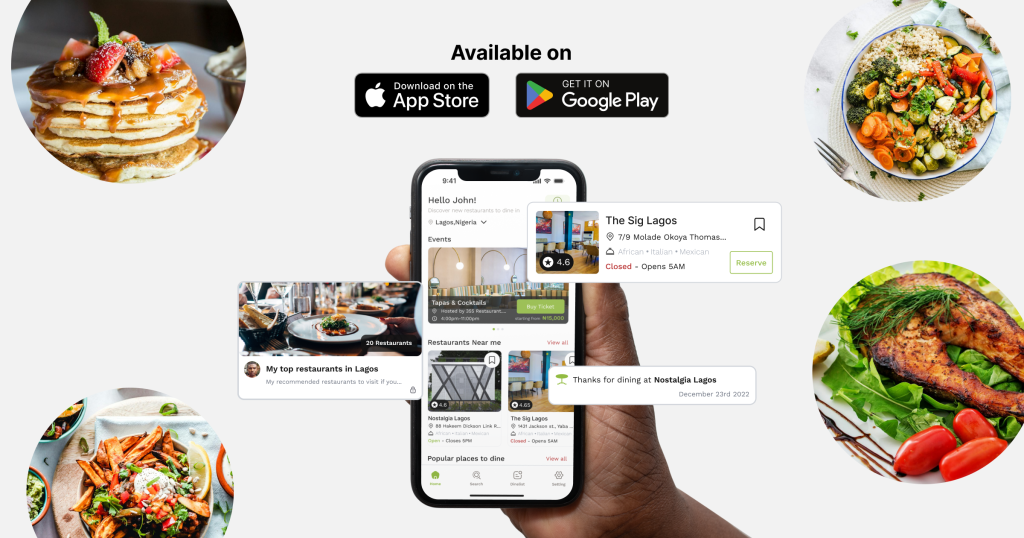
Ready to start building a loyal customer base for your restaurant in Lagos? Dinesurf gives Nigerian restaurants the tools to attract guests, convert bookings, and retain customers without the guesswork. See how it works at dinesurf.comDinesurf is the Guest Growth OS for hospitality brands across Africa.
We help restaurants, lounges, nightlife venues, and experience-led operators attract the right guests, convert demand into paid bookings, and turn first-time visits into repeat revenue, all from one connected system.
We are not just another restaurant software. We are the commercial growth layer built specifically for African hospitality — priced for this market, backed by a local team, and invested in the growth of the continent's dining culture.