Know What Is Being Said About You
The first step in managing a restaurant's reputation is understanding what that reputation actually is, not the version in the owner's head, but the version that exists in the public domain.
Most African restaurant owners have a general sense of how their restaurant is perceived. They know the regulars love them. They know there was a difficult period last quarter when service was stretched and a few guests left unhappy. What they often do not know is how all of that has accumulated on the platforms where potential guests are actively forming opinions.
Google Business Profile is the starting point. It is where the majority of restaurant searches in Nigerian and broader African cities begin and end, and it is where reviews carry the most weight in terms of both guest decision-making and search ranking. A restaurant with a 3.8 rating on Google and fifteen unanswered negative reviews is telling every potential guest something specific about how it operates, regardless of how good the food actually is. 88 percent of diners trust online reviews as much as personal recommendations, which means your Google rating is doing as much work as your best waiter.
Beyond Google, TripAdvisor remains relevant for restaurants that attract visitors and international diners. Instagram comments and DMs are an increasingly active reputation channel, particularly in Lagos where dining culture and social media are deeply intertwined. And increasingly, WhatsApp forwards, where a screenshot of a bad experience gets shared across group chats, represent a form of reputation damage that is largely invisible to the restaurant but spreads faster than any platform algorithm.
Setting up a simple system to monitor all of these channels does not require expensive tools. A weekly review of Google, TripAdvisor and Instagram mentions, combined with a culture of listening to what guests say to staff during service, gives most restaurants enough visibility to stay on top of what is being said.
Respond to Every Review. Every Single One.
This is the part of restaurant reputation management where most African restaurant owners drop the ball, not because they do not care but because they underestimate how much the response matters.
When a guest leaves a positive review, a response acknowledges them and signals to every future reader that the restaurant is engaged and appreciative. It costs two minutes and it builds goodwill publicly in a way that no marketing spend can replicate.
When a guest leaves a negative review, the response is even more important. Not because it will necessarily change the mind of the person who wrote it, but because it is a public statement to every potential guest who reads it about how the restaurant handles things when they go wrong.
A good response to a negative review does not argue, deflect or over-apologise in a way that sounds scripted. It acknowledges the experience specifically, takes ownership of what went wrong without making excuses, states what has been or is being addressed, and invites the guest back in a way that feels genuine. The tone should be calm, direct and human. In a culture where respect and relationship carry significant weight, a response that reads as considered rather than defensive goes a long way toward rebuilding trust publicly.
The restaurants across Africa that have the strongest online reputations are almost always the ones that respond consistently, not perfectly but consistently. The platform algorithms reward engagement and the guests reading those responses reward transparency. The numbers support this: restaurants that respond to reviews see 35 percent higher customer return rates than those that do not.
Use Negative Feedback as Operational Intelligence
The most underutilised aspect of restaurant reputation management is what happens after the review is read and the response is written. For most restaurants, the process ends there. For the ones growing fastest, it is just beginning.
Every negative review that reflects a genuine operational failure is pointing at something specific that can be fixed. A complaint about cold food is pointing at a breakdown somewhere between the kitchen pass and the table. A complaint about a lost reservation is pointing at a systems failure in how bookings are being managed. A complaint about inattentive service is pointing at a training or culture issue in the front-of-house team.
The discipline of reading reviews not just as customer feedback but as operational data is what separates a restaurant that improves from one that simply responds and moves on. Building a habit of reviewing feedback weekly, categorising it by theme and presenting the patterns to the relevant team leads monthly creates a feedback loop that continuously closes the gap between the experience the restaurant intends to deliver and the one guests are actually having.
This habit is particularly powerful in the African restaurant context because many of the operational challenges that show up in reviews, inconsistent service, communication failures between the kitchen and the floor, reservation management problems, are addressable. They are not fixed by spending more money. They are fixed by paying closer attention to what guests are already telling you for free.
Build a Proactive Reputation Strategy
Most of what has been discussed so far is reactive, which means it deals with reputation after something has been said. But the most effective restaurant reputation management strategies are built on proactive habits that shape the narrative before it is written by someone else.
Actively encouraging satisfied guests to leave reviews is one of the highest-return habits a restaurant can build. Research consistently shows that customers are 21 percent more likely to leave a review after a negative experience than a positive one, which means that without active encouragement, the review landscape tends to tilt toward negative experiences simply because those guests are more motivated to write.
A simple, warm ask at the end of a great meal, whether from the server, the manager or via a follow-up WhatsApp message, can meaningfully shift the ratio over time. The ask should feel natural rather than transactional. "We would love to know what you thought of your evening, a review on Google means a lot to us" lands very differently from a generic message asking for five stars.
Maintaining an active and consistent presence on Google Business Profile, including updated photos, accurate opening hours, a well-written description and timely responses to questions, is also a form of proactive reputation management that many African restaurants neglect. A Google profile that has not been updated in two years, that shows incorrect hours or no photos, tells a potential guest something about how the restaurant operates even before they have read a single review.
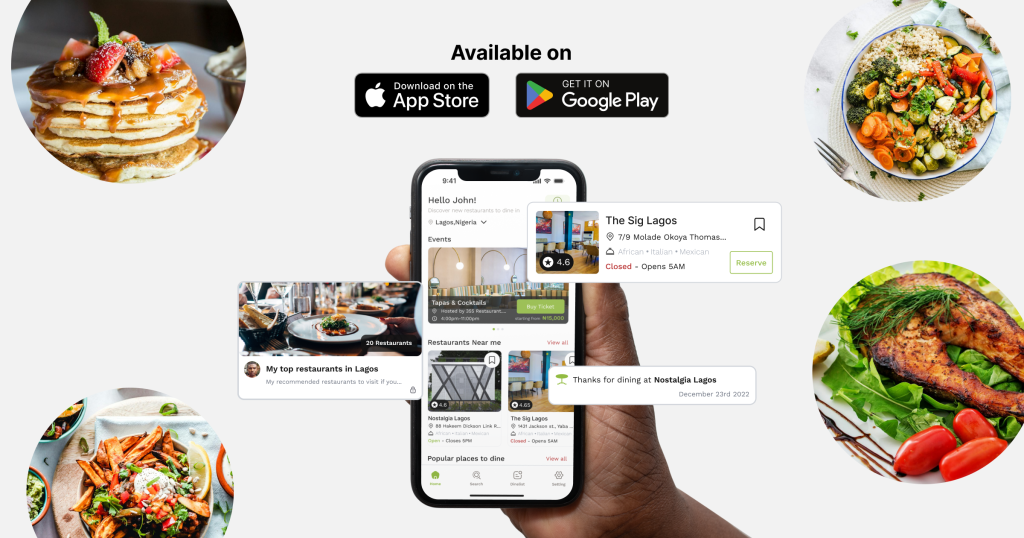
This is where having the right tools in place makes a meaningful difference. Dinesurf gives African restaurants a direct line to their guests through automated post-dining follow-ups that invite feedback while the experience is still fresh. Rather than waiting for a dissatisfied guest to find Google at midnight, restaurants on the platform can capture how guests felt immediately after their visit, address concerns directly before they become public reviews and build a consistent stream of positive feedback from guests who had a great time but might not have thought to leave a review on their own. For restaurant owners who are serious about reputation management but do not have the time or resources to manually track every channel, this kind of built-in feedback infrastructure removes the friction that stops most restaurants from being proactive about their reputation in the first place.
Train the Team to Manage Reputation at the Source
Every member of staff who interacts with a guest is a reputation manager whether they know it or not. The host who greets a guest warmly when they arrive and makes them feel expected is building the kind of experience that generates positive reviews. The server who disappears for twenty minutes when a table needs attention is building the opposite.
Integrating reputation awareness into staff training does not mean turning every service interaction into a review-mining exercise. It means helping the team understand that the experience they create for each guest is the thing that determines what that guest says about the restaurant afterward.
In practice this means training servers to read the table and address dissatisfaction before it becomes a review. It means empowering front-of-house staff to resolve small problems on the spot without escalating everything to a manager. It means creating a culture where the team genuinely cares about the guest experience rather than seeing it as someone else's responsibility.
The restaurants in Lagos, Nairobi and Accra that consistently earn strong reviews are not staffed by exceptional individuals. They are staffed by ordinary people who have been trained within a culture that takes hospitality seriously at every level of the operation.