Most restaurant owners in Africa are incredibly good at one thing: running a great dining experience. They know their food. They know their regulars. They know when the kitchen runs hot on a Friday and when Tuesday evenings tend to go quiet.
What they often do not know is why.
Why do some tables sit empty on nights when the restaurant should be packed? Why do guests who had a brilliant first visit never come back? Why does one menu item consistently drive bookings while another barely gets ordered, even though it is equally good?
Why do some weekends generate twice the revenue of others, with no obvious explanation?
These are not small questions. They are the difference between a restaurant that grows predictably and one that runs on hope, intuition, and a lot of hustle. And for too long, most African restaurant operators have had to answer them with guesswork, because the data simply was not available to them.
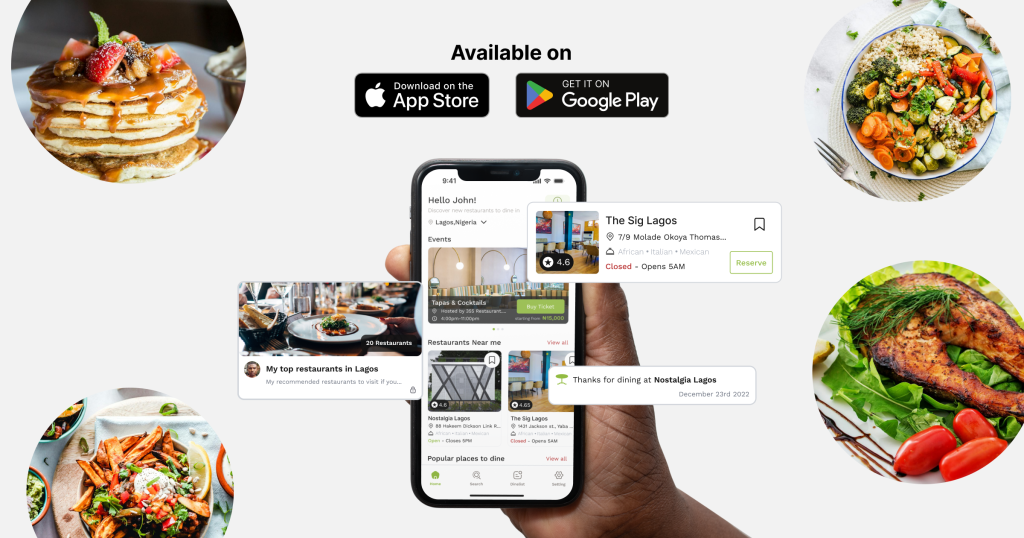
That is the problem Dinesurf's restaurant reservation software was built to solve. And it is a problem that has been quietly costing African restaurants real money for years.
Every booking is a data point. Every no-show is a data point. Every guest who books a table for two on a Saturday evening, orders a specific set of dishes, and comes back six weeks later is telling you something enormously valuable about your business. But only if you can see the pattern.
Traditional restaurant management in Africa has been largely analog. Reservation books. WhatsApp groups for confirming tables. Phone calls that go unanswered. Manual tallies of covers at the end of the night.
The information exists, but it lives scattered across notebooks, memory, and group chats. Nobody is aggregating it. Nobody is turning it into insight.
The result is that most restaurant owners are running a data-rich operation completely blind.
They overstaffed on a slow Tuesday because last Tuesday was busy. They ran out of a popular dish on Saturday because they ordered based on last month's average, not this weekend's actual reservation volume. They sent a promotional message to their entire customer list without knowing that 60 percent of those customers had not visited in over three months and needed a different kind of message entirely.
None of this is the operator's fault. It is a tooling problem. And tooling problems have solutions.
When a restaurant operates on Dinesurf, every guest interaction becomes a structured data point that feeds back into the business. A reservation is not just a booking.
It is a record of who is coming, when they are coming, how they prefer to be communicated with, what they have ordered in the past, whether they have a special occasion coming up, and how recently they last visited.
Over time, this builds something genuinely powerful: a real picture of how your restaurant is actually performing.
Which days and time slots consistently underperform, and what promotions or nudges have successfully moved demand into those windows. Which guests are at risk of churning and have not visited in a while, making them worth a targeted re-engagement message before they forget you entirely. Which new guests came in once and left without booking again, and what a well-timed follow-up might do to bring them back.
This is not data for its own sake. It is data that translates directly into action, and action that translates directly into revenue.
Most restaurant owners know they should be using data. Few know exactly where to start. Here are five metrics that Dinesurf surfaces for every restaurant on the platform:
None of these require a data analyst on payroll. The right restaurant reservation software surfaces all of it automatically.
One of the most consistently underappreciated challenges in restaurant management is demand timing. A fully booked Saturday does not make up for an empty Wednesday if your cost base stays the same across the week.
The most profitable restaurants are not necessarily the ones with the highest peak demand. They are the ones who manage the spread of that demand most intelligently.
Dinesurf gives restaurant operators the visibility to do this. When you can see in real time which slots are filling and which are lagging, you can make smarter decisions earlier.
You can push a targeted offer to your existing guest database for a Wednesday evening. You can surface availability to high-intent guests who were browsing your profile but did not complete a booking. You can structure your deposit and cancellation policy around the slots that historically carry the highest no-show risk.
None of this requires a marketing team. It requires the right system, running in the background, surfacing the right information at the right moment.
Here is a truth the African restaurant industry has not fully reckoned with yet. Acquiring a new customer costs significantly more than retaining an existing one. And yet, most restaurants spend the vast majority of their energy and marketing budget chasing new faces, while their existing guest base quietly drifts away through nothing more than neglect.
A guest who visited three months ago and has not been back is not necessarily gone. They may simply not have been given a good enough reason to return.
A personalised message reminding them of a dish they loved, a note ahead of their birthday, an invitation to an upcoming event: these are not complicated gestures. But without data, they are impossible to execute at any meaningful scale.
Dinesurf's CRM infrastructure makes this possible for any restaurant, regardless of size. The platform remembers what your guests love, flags when they are overdue for a return visit, and enables the kind of communication that feels personal rather than broadcast.
Because guests do not want to feel like a number in a database. They want to feel like a restaurant remembers them. That feeling is what turns a good dining experience into a lasting relationship. And lasting relationships are what fill tables on a slow Tuesday at 7pm.
It would be easy to take a data platform built for restaurants in New York or London and drop it into Lagos or Nairobi and call it localisation. Dinesurf was not built that way.
The platform was designed from the ground up around the realities of African hospitality operations. The fact that many restaurant operators manage their business from a mobile phone, not a desktop. That WhatsApp is a more reliable communication channel than email in most markets. That reservation behaviour in Lagos on a public holiday looks nothing like reservation behaviour in Kigali on a regular weekend.
That a ghost kitchen in Abuja and a fine dining room in Accra have fundamentally different data needs, even if the underlying growth challenges are similar.
This market specificity is not incidental. It is the entire point. Generic tools produce generic results. Tools that understand the market produce the kind of results that our restaurant partners have seen: moving from hundreds of thousands in monthly reservation deposits to millions, often within the first few weeks of going live on the platform.
There is a version of this conversation where data-driven restaurant management sounds like something reserved for large chains with full technology teams and sophisticated marketing departments. We want to be direct about rejecting that framing entirely.
Data is not a luxury that small and mid-sized African restaurants aspire to eventually. It is the foundational infrastructure that every restaurant needs to compete, grow, and build something that lasts.
The only question is whether that infrastructure is accessible and affordable enough to actually reach the operators who need it most.
That is precisely what Dinesurf's restaurant reservation software for Africa was built to be. Not a tool for the few restaurants that already have everything figured out. A growth operating system for every serious hospitality brand on this continent that is tired of running blind and ready to fill tables smarter.
The food has always been here. The demand has always been here. Now the data infrastructure is too.
Dinesurf is the Guest Growth OS for hospitality brands across Africa.
We help restaurants, lounges, nightlife venues, and experience-led operators attract the right guests, convert demand into paid bookings, and turn first-time visits into repeat revenue — all from one connected system.
We are not just another restaurant software. We are the commercial growth layer built specifically for African hospitality — priced for this market, backed by a local team, and invested in the growth of the continent's dining culture.