Every restaurant owner knows the feeling. Friday night is packed, the floor is buzzing, and by 10pm every table has turned twice. It feels like a great night. But come Monday, when you sit down with the numbers, something does not quite add up.
The revenue is there. The repeat guests are not.
This is the quiet problem that restaurant guest data can solve, and most operators are not using it yet. Not because the data does not exist, but because nobody has shown them what to do with it.
Restaurant guest data is any information that tells you something meaningful about the people who dine with you. That includes how often they visit, what they order, when they book, how much they spend on average, whether they came back after their first visit, and whether they left a review.
Some of this data lives in your POS system. Some is in your reservation platform. Some is in your email list, or buried in the comments section of a Google review.
The problem most restaurants face is not a shortage of data. It is that the data lives in three or four different places and nobody is connecting the dots.
When you bring it together, restaurant guest data stops being a record of what happened and starts becoming a tool for what happens next.
Think about the difference between a restaurant that treats every guest as a new guest versus one that actually knows who walked through the door.
In the first scenario, a guest who visited twice last month, ordered the seafood pasta both times, and left a five-star review gets the same generic Sunday email as someone who visited once six months ago and never came back. That is a wasted opportunity.
In the second scenario, that loyal guest gets acknowledged. Maybe it is a personalised message. Maybe it is a note from the team when they book again. Maybe it is just that the server knows to mention the new item on the menu that fits exactly what they love. Small things, but they compound.
A study by McKinsey found that restaurants which focus on customer experience grow revenue 1.7 times faster than those that do not, and grow customer lifetime value by 2.3 times on average. Restaurant guest data is what makes personalised experience possible at scale, not just in the moments when a manager happens to remember a name.
Here is something worth sitting with: most restaurants spend more energy trying to attract new guests than they do understanding the ones they already have.
New guest acquisition is expensive. You are paying for advertising, promotions, social content, delivery platform fees, and often discounting your way through it. The guest who already knows you, already trusts you, and already likes your food is far cheaper to bring back than it is to replace with someone new.
Research consistently shows that increasing customer retention by just 5 percent can increase profits by anywhere between 25 and 95 percent. That is not a small lever.
But you cannot pull that lever without restaurant guest data. You need to know who your regulars are, what keeps them coming back, and when they stopped coming back so you can do something about it before they are gone for good.
1. You Can Identify Your Most Valuable Guests
Not all guests are equal in terms of revenue contribution. Some visit frequently, spend well, and bring others along with them. Others visit once, spend minimally, and are unlikely to return regardless of what you do.
Restaurant guest data lets you segment these groups. Once you know who your high-value regulars are, you can invest in keeping them. Personalised communication, early access to events, priority reservations, small gestures that do not cost much but signal that you see them. The return on this investment is almost always higher than any discount campaign targeting strangers.
2. You Can Spot Guests Who Are About to Disappear
If someone visited every two weeks for three months and then stopped showing up, that is a signal. Without data, you would never notice. With data, you can act.
A well-timed message, a relevant offer, or even just a check-in can recover a guest before they become a former guest. This is called churn prevention, and it is one of the highest-leverage things a restaurant can do with its data.
3. You Can Make Smarter Menu and Pricing Decisions
Your POS data tells you which dishes are selling and which are sitting. Your reservation data tells you which days are consistently slow. Your average spend per guest tells you whether your pricing is working or whether guests are ordering less than you would expect.
Taken together, this is a real-time picture of your restaurant's performance that no amount of intuition can replicate. Restaurants that use this kind of data to guide decisions consistently outperform those that rely on gut feeling alone.
4. You Can Build Marketing That Actually Works
Generic marketing gets generic results. When you know your guests, you can communicate with them in a way that is relevant to who they are and what they care about.
A guest who always books for two on a Saturday evening does not need to hear about your Tuesday lunch special. A guest who orders wine every visit is more likely to respond to a wine pairing dinner invite than one who never orders drinks. Segmenting your audience based on restaurant guest data and matching your messaging to each segment is the single most effective way to increase response rates, repeat visits, and overall revenue from your existing database.
If restaurant guest data is this valuable, why are so many restaurants not using it properly?
A few reasons come up consistently.
The data is fragmented. It lives across a POS system, a third-party booking platform that does not share guest information back with the restaurant, a WhatsApp group, and a spreadsheet someone built in 2022 and has not updated since. There is no single view.
The tools feel complicated. Many data platforms are built for hotel chains or enterprise-level businesses. They are expensive, require dedicated staff to manage, and come with a learning curve that most restaurant operators do not have time for.
There is no clear starting point. When everything feels like a priority, nothing gets done. Knowing that guest data matters is not the same as knowing what to collect, where to store it, or what to do with it first.
These are solvable problems. But they require the right infrastructure.
This is exactly the gap Dinesurf was built to close.
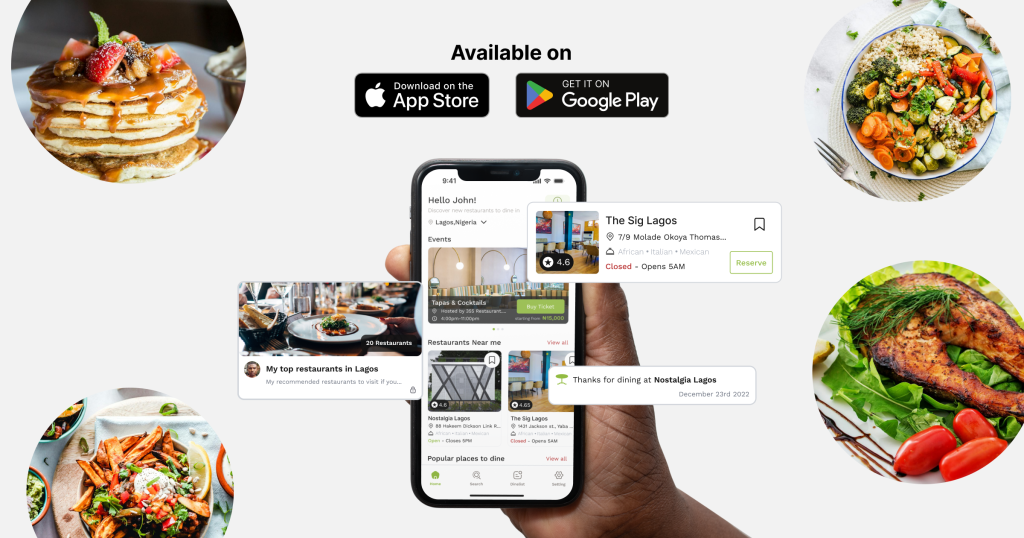
Dinesurf gives restaurants a single platform to manage reservations, collect guest information, and start building the kind of data picture that drives real revenue decisions. Instead of chasing data across five different tools, everything flows into one place.
Restaurants on Dinesurf can see who their repeat guests are, track visit frequency, monitor booking patterns, and use that information to personalise communication and run targeted campaigns. It is the kind of capability that used to require a full marketing team and a significant budget. Now it is built into the platform that manages your bookings.
For restaurant operators across Lagos, Nairobi, Kigali, Johannesburg, and beyond, this is not a nice-to-have. It is quickly becoming the baseline for running a hospitality business that survives and grows.
The restaurants that will grow over the next five years are not necessarily the ones with the best chefs or the most beautiful interiors, though those things still matter.
They are the ones that understand their guests well enough to keep them coming back, to anticipate what they want before they ask, and to make every interaction feel less like a transaction and more like a relationship.
That level of understanding does not happen by accident. It is built on restaurant guest data, collected consistently, used intelligently, and acted on quickly.
The good news is that the data is already there. Most restaurants are already sitting on more insight than they realise. The question is whether you have the tools to unlock it.
Dinesurf is the Guest Growth OS for hospitality brands across Africa.
We help restaurants, lounges, nightlife venues, and experience-led operators attract the right guests, convert demand into paid bookings, and turn first-time visits into repeat revenue, all from one connected system.
We are not just another restaurant software. We are the commercial growth layer built specifically for African hospitality — priced for this market, backed by a local team, and invested in the growth of the continent's dining culture.