Every restaurant owner has heard some version of the same advice: post more on social media, run a promotion, get on Google. And for a while, it works. The reservations come in. The weekend fills up. The Instagram numbers move.
Then the unexpected happens. The dining room is half empty. The WhatsApp group of regulars has gone quiet. The promotion that drove a rush two weeks ago has faded and you’re back to wondering how to fill the floor before the weekend saves you again.
This is not a marketing problem. It is not a staffing problem. It is not even a food problem.
It is a growth infrastructure problem. And it is one of the most common — and least talked about — challenges facing hospitality brands across Africa today.
What Growth Infrastructure Actually Is
The term sounds technical, but the idea is simple.
Growth infrastructure is the connected system that takes a potential guest from first discovering your restaurant all the way through to becoming a regular. It is the set of tools, processes, and automations that make revenue repeatable — not dependent on the next promotion or the next busy Friday.
Think about what actually has to happen for a restaurant to grow consistently. A guest has to find you. They have to have a clear way to book. That booking has to be confirmed and protected from falling through. When they visit, their details and preferences need to be captured. After they leave, someone — or something — needs to follow up and bring them back.
Most restaurants handle some of these steps. Very few handle all of them in a connected, intentional way. The ones that do are the ones that grow without being perpetually dependent on new traffic to survive.
That connected system — from discovery to repeat visit — is growth infrastructure.
Why Most Hospitality Brands Don’t Have It
The gap isn’t usually laziness or lack of ambition. It comes from how restaurants typically build their operations.
Most start with a kitchen, a floor, and a way to take payments. Everything else gets added as problems arise. A booking system here. A WhatsApp broadcast list there. A spreadsheet for events. A loyalty card that nobody stamps consistently. Over time, the restaurant ends up with a collection of disconnected tools, each doing one thing in isolation, none of them talking to the others.
The result looks like a working operation from the outside. Inside, it leaks constantly. Guest data disappears after each visit. No-shows happen because there’s no deposit system. Loyal regulars drift away because there’s no mechanism to reach them. Event bookings conflict with regular reservations because nothing is integrated. Marketing campaigns go out to everyone rather than the right guests at the right time.
Every one of those leaks costs money. And because each leak is small on its own, it’s easy to miss the cumulative effect. The restaurant stays busy without ever feeling stable.
The Five Things Growth Infrastructure Does
A proper growth infrastructure for a hospitality brand does five things — and it does them as one connected system, not five separate tools.
When a potential guest encounters your restaurant — through social media, a Google search, a recommendation, or a listing on a discovery platform — there needs to be somewhere structured for that interest to go. A direct booking flow. An event enquiry page. A website that converts visitors rather than just informing them.
Without this, demand leaks at the very first step. The guest is interested and has nowhere to act on that interest immediately. By the time they think of it again, the moment has passed.
- It converts interest into committed revenue.
A reservation is not the same as revenue. It is an intention. The gap between a booking and a confirmed, paid visit is where a significant amount of hospitality income disappears every week — through no-shows, last-minute cancellations, and walk-aways.
Growth infrastructure closes that gap through deposits, prepayments, automated confirmation messages, and reminder workflows. These are not administrative details. They are the mechanisms that turn a maybe into a yes.
- It builds guest intelligence over time.
Every visit a guest makes to your restaurant is data. Their name. What they ordered. How much they spent. Whether they came for a birthday or a business lunch. Whether they booked two weeks in advance or walked in on a Tuesday afternoon.
When this data is captured and organized, it becomes the foundation for every smart decision the restaurant makes — from menu planning to targeted marketing to knowing which guests to prioritize on a busy night. When it isn’t captured, the restaurant starts from zero with every guest, every time.
The most expensive thing a restaurant can do is acquire a new guest. The most profitable thing it can do is bring an existing guest back.
But retention doesn’t happen passively. A guest who had a great experience and then never heard from the restaurant again will simply drift toward wherever they discover next. Growth infrastructure changes this through automated follow-up — a WhatsApp message after a birthday dinner, an email when a new menu launches, a targeted offer for a guest who hasn’t visited in 60 days.
Done manually, this is impossible to sustain. Done through the right system, it runs in the background without adding to an already stretched team’s workload.
- It gives operators control over their own revenue.
This is the part that gets missed most often. Many African restaurants have handed the ownership of their guest relationships to third-party platforms — delivery apps, reservation marketplaces, social media platforms — without fully realizing the cost.
When a platform owns the guest relationship, the restaurant becomes a supplier. The platform controls the data, sets the terms, and takes the commission. Growth infrastructure reverses this by building direct booking channels, owned guest databases, and communication systems that belong entirely to the restaurant.
The goal is not to eliminate third-party platforms entirely. It is to reduce dependence on them — and to ensure that the most valuable guests are ones the restaurant owns and can reach directly.
What This Looks Like for an African Restaurant
Take a restaurant in Lagos running a Sunday brunch and occasional private events.
Without growth infrastructure, Sunday brunch is promoted through Instagram. Guests DM to book. The team confirms over WhatsApp. On the day, some guests show up, some don’t. Nobody captures the guest data. The following week, the team starts from scratch.
Private events are handled separately — a different WhatsApp thread, a different spreadsheet, no connection to the regular reservation system. On a busy weekend, the floor manager discovers that tables blocked for a private party were also booked online. Chaos follows.
With growth infrastructure, the same restaurant operates differently. Sunday brunch has a direct booking page with a deposit requirement. Confirmations go out automatically. Guest profiles are built from every booking. A week after each brunch, a follow-up message goes out to every attendee. Private events are managed inside the same system as regular reservations — no conflicts, no manual coordination, no chaos.
The food hasn’t changed. The team hasn’t changed. What’s changed is the system behind the operation.
Growth Infrastructure Is Not a Luxury
There is a version of this conversation where growth infrastructure sounds like something only large restaurant groups need to think about. A nice-to-have for when the business is more established.
That framing gets it exactly backwards.
Growth infrastructure is most important at the stage when a restaurant is trying to move from inconsistent to stable — from busy weekends and quiet weekdays to reliable, growing revenue across the week. It is the foundation that makes scale possible, not the reward for having already scaled.
For African hospitality brands specifically, the opportunity is significant. The demand is there. The dining culture is vibrant. What has been missing is the infrastructure to capture that demand consistently and turn it into the kind of revenue that compounds over time.
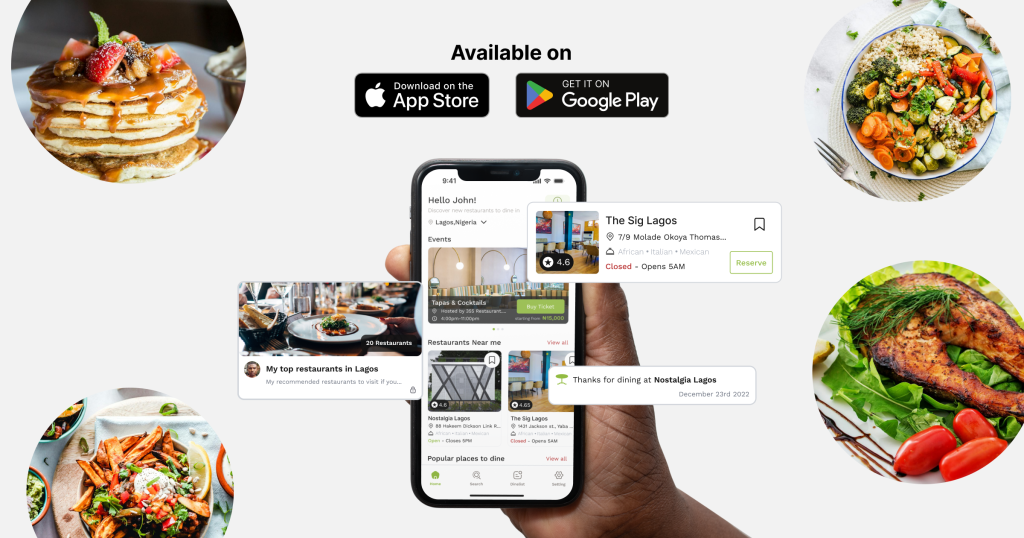
That gap is what Dinesurf was built to close. Not as another tool to add to the pile — but as the connected growth system that runs the full guest journey from first discovery to loyal regular.
Because in hospitality, the difference between a busy restaurant and a growing one is rarely the food.
It’s the infrastructure behind it.
About Dinesurf
Dinesurf is the Guest Growth OS for hospitality brands across Africa.
We help restaurants, lounges, nightlife venues, and experience-led operators attract the right guests, convert demand into paid bookings, and turn first-time visits into repeat revenue — all from one connected system.
We are not just another restaurant software. We are the commercial growth layer built specifically for African hospitality — priced for this market, backed by a local team, and invested in the growth of the continent's dining culture.