Every Friday afternoon, something predictable happens across Lagos. Phones light up. Notifications stack. And somewhere between a voice note from a family group and a payment alert from the bank, a message arrives from a restaurant that a guest visited two Saturdays ago. It is not a generic blast. It mentions their name. It references the grilled fish they ordered last time. It tells them the kitchen is running a special this weekend and asks if they would like a table.
Nine times out of ten, they book.
This is WhatsApp marketing for restaurants done well, and it is happening more consistently across African cities than most people outside the continent realise. While global restaurant markets are still debating whether WhatsApp belongs in a marketing strategy, African restaurants, particularly in Nigeria, are already ahead of that conversation. Not because they had more resources or better technology. Because they had no choice but to meet their guests exactly where their guests already were.
That instinct has turned into an advantage that is genuinely difficult to replicate.
To understand why WhatsApp marketing for restaurants lands so differently in an African context, you have to understand how WhatsApp itself functions across the continent.
In Nigeria, Kenya, Ghana and South Africa, WhatsApp is not one communication option among many. It is the communication layer that holds everything together. Family conversations, business negotiations, customer service, payment confirmations, job applications and social plans all happen on the same platform. WhatsApp penetration exceeds 95 percent among internet users in Nigeria, which means that when a restaurant sends a message through WhatsApp, it is not competing with email newsletters, SMS promotions and push notifications for the guest's attention. It is arriving in the same space where the guest is already spending most of their connected time.
The open rate for WhatsApp business messages sits at 98 percent. That figure sounds almost impossible until you consider that WhatsApp messages arrive as personal notifications on a platform people check between 23 and 25 times a day. An email newsletter can wait in an inbox for three days before being opened or deleted. A WhatsApp message is read within minutes of arrival, almost every time.
For a Lagos restaurant trying to fill tables on a slow Wednesday or drive traffic to a new menu launch, that difference is not minor. It is the entire marketing equation.
Beyond open rates and penetration statistics, there is something more fundamental at play in why WhatsApp marketing for restaurants works so well in Nigeria specifically.
Nigerian dining culture is built on relationships. The restaurant owner who knows your name. The waiter who remembers how you like your pepper soup. The host who checks on you mid-meal because they genuinely want to know if everything is right. These are not nice extras in the Nigerian hospitality experience. They are baseline expectations, and the restaurants that consistently deliver on them are the ones that build the kind of loyal guest bases that sustain a business through slow seasons, price increases and the constant competition of new openings.
WhatsApp extends this relationship logic beyond the four walls of the restaurant. A restaurant in Accra built a WhatsApp list of nearly 6,000 guests across two locations by training waitstaff to collect numbers during service and segmenting guests by dining habit rather than blasting the same message to everyone.
A well-crafted WhatsApp message does not feel like marketing. It feels like the restaurant checking in, which is exactly how the best Nigerian hosts have always operated. When a guest receives a message that acknowledges their last visit, references something specific about their experience, or gives them early access to something before the general announcement goes out, they do not feel marketed to. They feel remembered.
That feeling is the foundation of loyalty, and in a market as competitive as Lagos, loyalty is worth more than any advertising spend.
Most Nigerian restaurant owners who are not yet using WhatsApp strategically assume it means sending a broadcast message to everyone on their contact list every time there is something to announce. This approach is exactly what gives WhatsApp marketing a bad reputation when it goes wrong. Guests who receive generic, unsegmented messages about promotions that are not relevant to them will mute the number, delete the chat or block the contact entirely. Once that happens, the channel is gone.
The restaurants getting this right are doing something different. They are treating WhatsApp as a direct line to specific guests rather than a mass communication tool, and they are building their approach around three things: segmentation, timing and personalisation.
Segmentation means knowing who is on your list and why. A guest who comes in every Friday evening for dinner with their partner is a different audience from the corporate client who books the private dining room for team lunches twice a month. Sending the same message to both of them is a missed opportunity at best and an irritant at worst. Keeping separate broadcast lists for regulars, occasional visitors, event guests and corporate clients allows the restaurant to communicate in ways that feel relevant rather than random.
Timing means sending messages when they are most likely to land well. Thursday afternoon is one of the most effective windows for Lagos restaurants because it catches guests in the moment of planning their Friday and weekend. A message that arrives at that moment with a genuine reason to visit, a new dish, a special event, an early booking incentive, is answering a question the guest was already asking themselves. A message that arrives on Monday morning about a weekend event is too early to feel urgent. A message on Saturday evening about the same event is too late to be useful.
Personalisation means using what you know. Every guest interaction inside a restaurant generates information that can make the next WhatsApp message more relevant. The guest who always orders the suya platter. The couple who celebrate their anniversary every July. The table that always asks for a quieter corner. These details, captured and used thoughtfully, are what separate a message that feels personal from one that feels like it was sent to a contact list.
WhatsApp Business is the starting point for any restaurant serious about using the platform strategically. The free app allows restaurants to set up a verified business profile, create a product catalogue, use quick replies for frequently asked questions and manage broadcast lists of up to 256 contacts. For smaller restaurants or those just beginning to build their WhatsApp marketing approach, this is more than enough to get started.
For restaurants with a larger contact base or those that want to automate parts of the process, the WhatsApp Business API offers significantly more capability. Automated booking confirmations, no-show reminders, post-dining feedback requests and personalised campaign messages can all be triggered through the API without requiring a staff member to manually send each one. Given that WhatsApp messages sent through the API carry the same 98 percent open rate as standard messages, the automation does not come at the cost of engagement.
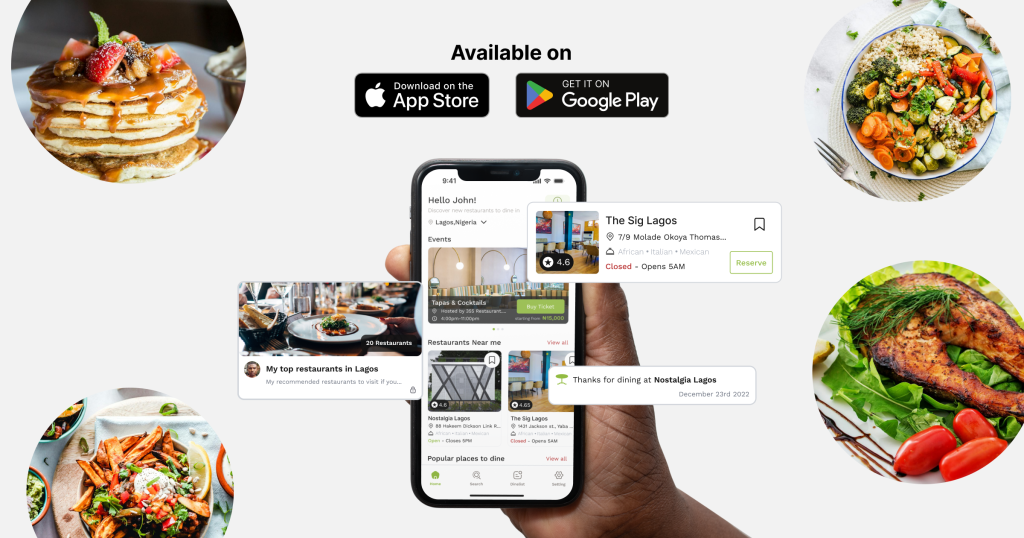
The practical barrier for most Nigerian restaurant owners considering the API is the setup process, which requires working with a third-party provider. Dinesurf integrates WhatsApp communication directly into its guest management system, which means restaurants on the platform can send booking confirmations, reminders and targeted messages without managing a separate WhatsApp infrastructure. For owners who want the capability without the technical complexity, this is the most direct path.
One of the most underutilised aspects of WhatsApp in Nigerian restaurants is its function as a guest service channel rather than just a marketing one. The same platform that a restaurant uses to send a promotional message can be the channel through which a guest asks a question about allergens, requests a table modification, or follows up on a booking they made through another channel.
Restaurants that respond to these kinds of WhatsApp messages quickly, within the hour during business hours, build a reputation for responsiveness that translates directly into bookings. Research consistently shows that guests who can reach a business easily on a channel they trust are significantly more likely to convert to a reservation than those who have to call, email or send a DM and wait for an uncertain reply.
In a city where guests are choosing between dozens of restaurant options for any given evening, the restaurant that responds on WhatsApp within twenty minutes has a meaningful competitive advantage over the one that replies the following morning.
WhatsApp marketing for restaurants in Africa is not a trend that is coming. It is already here, and the restaurants that have built it into their operations are seeing results that the ones still relying on Instagram posts and walk-in traffic cannot match.
The advantage African restaurants have is structural. Their guests are already on the platform, already comfortable communicating through it, and already expecting the kind of direct, personal interaction that WhatsApp enables better than any other channel. The question is not whether to use WhatsApp. It is whether to use it intentionally or to keep treating it as an afterthought.
Nigerian hospitality has always been about making guests feel known. WhatsApp is simply the most powerful tool available right now to extend that feeling beyond the dining room and keep it alive between visits.
The restaurants building that bridge are the ones their guests will always find a reason to come back to.
Dinesurf is the Guest Growth OS for hospitality brands across Africa.
We help restaurants, lounges, nightlife venues, and experience-led operators attract the right guests, convert demand into paid bookings, and turn first-time visits into repeat revenue, all from one connected system.
We are not just another restaurant software. We are the commercial growth layer built specifically for African hospitality — priced for this market, backed by a local team, and invested in the growth of the continent's dining culture.