There is a particular kind of chaos that happens at a restaurant front desk on a busy Friday evening. The phone is ringing. A walk-in party of six is standing at the entrance looking expectant. The reservation book is open on a page that has three names crossed out, two that are barely legible and one that nobody can remember taking. Somewhere in the middle of all of this, a regular guest who booked a table for 7PM two days ago is standing at the counter being told there is no record of their reservation.
This is not a staffing problem. It is a systems problem. And it is playing out in restaurants across Lagos, Abuja, Nairobi and Accra every single weekend.
The manual reservation process, whether it lives in a physical notebook, a WhatsApp thread or a shared spreadsheet, was never built for the volume and complexity of a modern restaurant operation. It was a workaround that became a habit, and like most habits that start as convenience, it is now costing far more than most restaurant owners realise.
Here is what the manual process is actually costing you, and what a restaurant reservation system does differently.
Most restaurant owners who still rely on manual reservations would describe the process as manageable. And on a slow Tuesday, it probably is. The problem with managing reservations manually is not that it fails every day. It is that it fails at the worst possible moments, on the busiest nights, with the guests who matter most.
Double bookings are the most obvious failure. When reservations are taken across multiple channels, a phone call here, a WhatsApp message there, a walk-in who asked to book for next Saturday, and all of them land in the same physical book managed by different members of staff across different shifts, the conditions for a double booking are built into the process itself. It is not a question of whether it will happen. It is a question of how often.
No-shows are the second and often more expensive problem. Industry research shows that restaurants without automated reminders experience no-show rates of between 15 and 20 percent. On a night where you have 60 covers booked and 12 of them do not arrive, you have lost revenue that cannot be recovered, tables that sat empty during your peak hours, and staff who were rostered and paid to serve guests who never came.
The manual process has no mechanism to address this. There is no automated reminder going out 24 hours before the booking. There is no confirmation message that gives the guest an easy way to cancel in time for you to release the table. There is no system tracking which guests are chronic no-shows so you can manage their bookings differently. There is just a name in a book and a hope that they show up.
The third cost is the one that is hardest to quantify but most damaging over time: the erosion of the guest experience. A guest who books a table, arrives on time and is told there is no record of their reservation does not just have a bad evening. They leave with a story about your restaurant that they will tell to people who have never been. In a market where word of mouth still drives a significant portion of restaurant discovery across African cities, that story is worth far more than the cost of one lost cover.
A reservation system is not simply a digital version of the reservation book. That framing undersells what it actually changes about how a restaurant operates.
The most immediate change is centralisation. Every reservation, regardless of where it comes from, lands in one place. A booking made through your website at 11PM on a Sunday night sits alongside the one taken by your host at lunchtime on Saturday and the one that came in through your Dinesurf listing on Wednesday morning. There is no reconciling multiple channels at the start of each shift. There is no wondering whether the WhatsApp booking made it into the book. The system holds everything, and every member of staff with access can see the same real-time picture.
The second change is automation. Confirmation messages go out the moment a booking is made. Reminder messages go out 24 hours before and again on the day of the reservation. Cancellation links give guests a frictionless way to free up the table if their plans change, giving you time to fill it rather than discovering the no-show at 7:45PM when the kitchen has already prepped for them.
The data consistently supports this. Automated reminders cut no-show rates significantly, giving restaurants a meaningful and immediate return simply from reducing the number of guests who forget they made a reservation.
This is the part of the manual reservation conversation that most restaurant owners have not fully considered. Every time a guest books a table through a manual process, a significant amount of valuable information either goes uncaptured or sits in a notebook that nobody ever analyses.
How many times has this guest visited in the last three months? What is their average spend? Do they tend to book for occasions? Have they ever complained? Do they always request a specific table? Do they typically order wine?
With a manual system, the answer to all of these questions is the same: you do not know. And if you do not know, you cannot act on it.
A restaurant reservation system captures this data automatically and builds a guest profile over time. The third visit from the same guest is no longer just another cover. It is an opportunity to acknowledge their loyalty, personalise their experience and communicate with them between visits in a way that keeps your restaurant front of mind.
This is what separates the restaurants that build lasting guest relationships from the ones that are constantly trying to acquire new customers to replace the ones they lost without realising it. The guests are in the building. The data is there. The manual process simply has no way to capture it.
Beyond the guest experience, there is a staff cost to manual reservations that adds up quietly in the background of every service.
Someone has to answer the phone for every booking call. Someone has to manually send a confirmation if your process includes one. Someone has to check the book at the start of each shift, reconcile it with any other channels where bookings came in, and brief the team on who is expected and when. Someone has to field the calls from guests who are not sure whether their booking went through. Someone has to manage the front desk chaos when two parties arrive for the same table at the same time.
All of this is staff time that could be spent on the floor, in the kitchen or building the kind of guest interactions that generate loyalty and return visits. A reservation system does not replace your team. It removes the administrative burden that was quietly pulling them away from the work that actually matters.
For restaurant owners across Africa who are ready to move away from the manual process, the choice of reservation system matters. Not every platform was built with the African market in mind, and the operational realities of running a restaurant in Lagos are different from those in London or New York.
The right system for an African restaurant should handle the full reservation workflow without requiring significant technical infrastructure. WhatsApp penetration exceeds 95 percent across Nigeria, Kenya and South Africa, making it the single most important communication channel for reaching African diners directly. It should integrate with the communication channels your guests already use, including WhatsApp, which remains the dominant messaging platform across Nigeria, Kenya, Ghana and South Africa. It should be accessible on mobile without friction, both for guests making bookings and for staff managing them. And it should surface the guest data that allows you to build direct relationships rather than simply processing transactions.
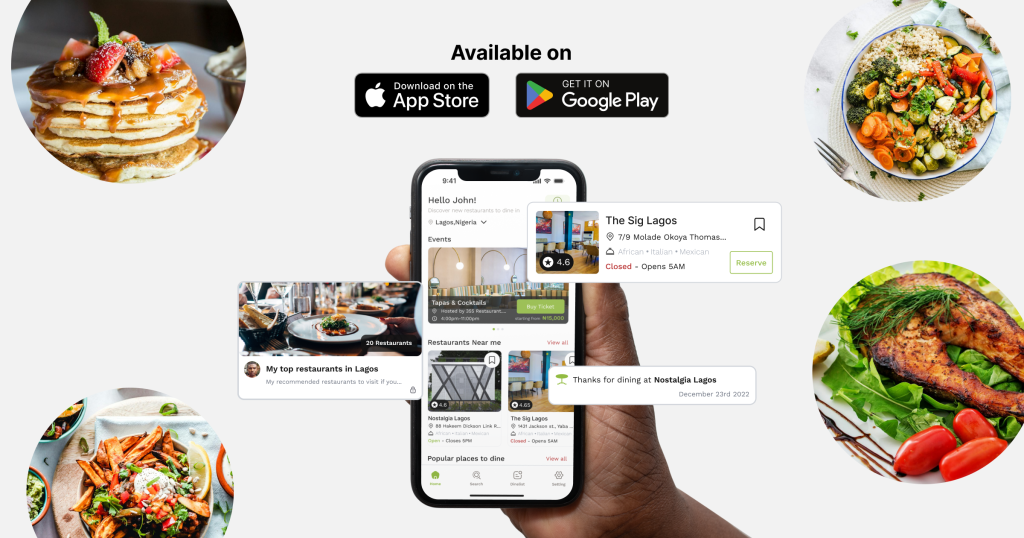
Dinesurf was built with exactly this context in mind. The platform manages reservations, captures guest data, and enables the kind of direct communication that turns a first-time visitor into a regular. For restaurants that are currently managing bookings through a notebook or a WhatsApp thread, the shift to a centralised system is not a complicated technical project. It is a decision that pays for itself quickly in recovered revenue, reduced no-shows and the guest data that every growing restaurant needs.
It is worth being direct about what staying with the manual process actually means in 2026.
It means accepting a no-show rate that is significantly higher than it needs to be. It means losing guest data that your competitors who have made the switch are actively using to bring people back. It means your front desk team spending hours each week on administrative work that a system would handle in seconds. And it means the occasional double booking, the occasional lost reservation, and the occasional guest who leaves with a story about your restaurant that you would rather they did not tell.
The restaurants that are growing consistently across African cities right now are not the ones with the biggest marketing budgets or the most Instagram-friendly interiors. They are the ones that have made the operational decisions that allow them to serve guests well at scale, to know who their guests are, and to build the kind of relationships that generate return visits without requiring a discount to do it.
A restaurant reservation system is not a luxury addition for restaurants that have already figured everything else out. It is the infrastructure that makes everything else possible.
The reservation book had its moment. That moment has passed.
Dinesurf is the Guest Growth OS for hospitality brands across Africa.
We help restaurants, lounges, nightlife venues, and experience-led operators attract the right guests, convert demand into paid bookings, and turn first-time visits into repeat revenue, all from one connected system.
We are not just another restaurant software. We are the commercial growth layer built specifically for African hospitality — priced for this market, backed by a local team, and invested in the growth of the continent's dining culture.