Ask a room full of Lagos diners how they found the last new restaurant they tried, and most of them will give you the same answer: Instagram. Not Google, not a billboard, not a flyer. A reel that made the food look unreal, a story a friend reposted, a page they stumbled on and could not stop scrolling. For restaurants here, Instagram is not one marketing channel among many. It is the front door.
And yet so many restaurants treat it like a chore. A blurry photo once a week, a caption that says “come and dine with us,” and then confusion about why the tables are not filling. Restaurant Instagram marketing done properly is not about posting more. It is about posting in a way that turns a scroll into a booking. Here is how to actually make that happen.
Let us start with just how much is riding on this, because the numbers are striking. In our own data at Dinesurf, drawn from real bookings across Nigerian restaurants, 60% of diners who booked online said they first heard about the restaurant on Instagram. A friend’s recommendation came a distant second at 22%. Every other channel, from Google to walking past, was in single digits.
Sit with that for a moment. Six in ten of your potential guests are deciding whether to visit based on what they see on one app. That means your Instagram is not a vanity project or a place to occasionally post specials. It is, for most restaurants in Lagos, the single most important storefront you have. If it looks dead, inconsistent, or unappetising, you are losing guests before they ever knew they wanted to come.
If your goal is new diners rather than just reminding existing followers you exist, Reels are where the game is won. Instagram pushes video hard, and Reels are how your content reaches people who do not already follow you. A good static photo keeps your current audience warm. A good reel introduces you to hundreds of people who have never heard of you.
The restaurants winning on this do not overthink it. Short clips, roughly 15 to 30 seconds, of the things that make food irresistible: a cheese pull, a sauce being poured, a dish landing on the table, the sizzle of something hitting the grill. Behind-the-scenes moments work beautifully too, the kitchen in full flow, a cocktail being built, your team setting up before service. Industry data consistently shows Reels reaching far more people than static posts, which is exactly why they deserve the bulk of your effort.
One small, powerful trick: match your reel to a trending sound. The algorithm rewards it, and a dish set to the right audio at the right moment can travel far beyond your usual reach. You do not need a videographer. A clean, well-lit phone video of genuinely appetising food will outperform an expensive, lifeless one every time.
“Post more” is useless advice if you do not know what to post. A simple mix keeps your feed varied without you staring at a blank screen every morning. Think of your content in a few buckets and rotate through them.
There is the food itself, your strongest and most frequent content, shot well and made to look crave-worthy. There is behind-the-scenes, the kitchen, the prep, the people, which builds the human connection that turns a page into a place. There is social proof, reposting guest photos and reviews, which quietly tells newcomers that others love you. There are offers and what’s-on, your lunch deal, a Friday event, a seasonal dish, the posts that give someone a concrete reason to come this week. And there is personality, the light, funny, human posts that remind people there are real people behind the brand.
You do not need all five every day. Rotating through them across a week keeps the feed fresh and gives different kinds of followers a reason to stop scrolling.
Here is where a lot of restaurants quietly lose guests. Someone sees a great reel, taps through to the profile, and then... nothing. No clear location, no sense of what the place serves, and no obvious way to book. That person was ready, and you lost them at the final step.
Your bio is doing more work than you think. Treat it as a tiny, high-pressure sales pitch. Say clearly what you serve and where you are, because Instagram has become a genuine discovery engine and people search by cuisine and area. Put your neighbourhood right in there. Then make the next step effortless with one clear link that takes people straight to your menu or, better still, a booking page.
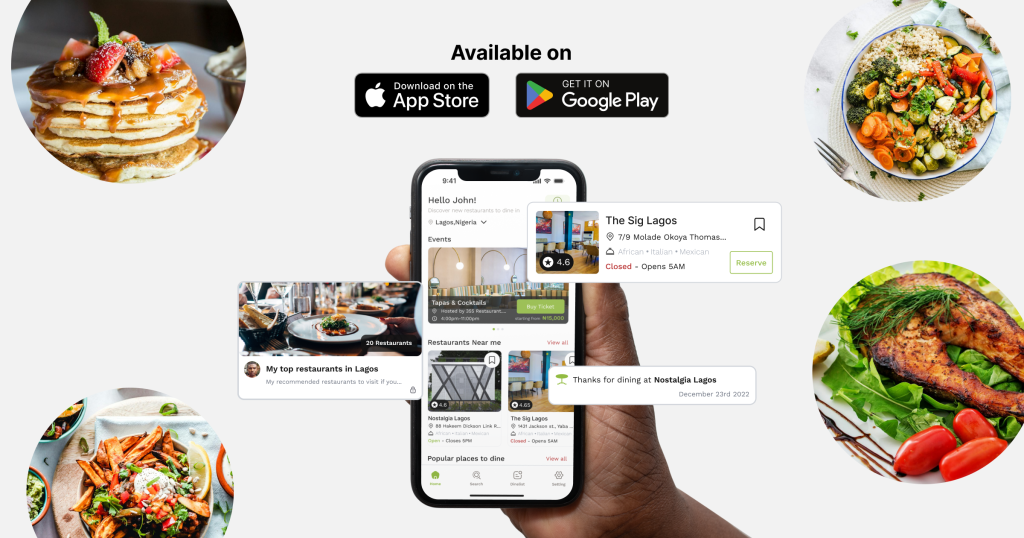
This last part matters enormously, and it is one most restaurants get wrong. Our report found that fewer than 12% of restaurants even have a website, which means when a diner tries to look them up or book, there is nothing there to catch them. The restaurants that convert Instagram attention into actual tables are the ones that make booking a two-tap affair. A platform like Dinesurf lets you put a real booking link in your bio so the guest who just fell in love with your food can reserve a table on the spot, instead of drifting off to figure it out later and never coming back.
It is easy to feel good about a post that gets a few hundred likes. But likes are the most overrated number on the platform. They look nice and they do almost nothing for your business. A thousand likes from people who will never visit is worth less than ten saves from locals planning their weekend.
The signals that actually matter are the ones that point to real intent: saves, shares, direct messages, and clicks to your profile or booking link. As social media specialists quoted by Bar & Kitchen on getting more from Instagram put it, vanity likes do not grow businesses, while shares, saves, DMs, and profile clicks are what drive real-world bookings. When someone saves your post, they are bookmarking you for later. When they DM you, they are halfway to a reservation. Those are the numbers to watch and the behaviours to design your content around.
The most persuasive content about your restaurant is not the content you make. It is the content your guests make. When a diner posts a photo of your food, they are endorsing you to everyone who follows them, with a credibility no ad can buy.
So make it easy and rewarding for them to do it. A plate worth photographing is the start. A small, tasteful sign with your handle, a quick thank you when someone tags you, and a habit of reposting guest photos and stories all encourage more of the same. Reposting user content does double duty: it fills your own feed with authentic social proof and it makes the original poster feel appreciated, which turns them into a repeat advocate. Over time, a steady stream of guests showing their friends a good night at your place becomes a marketing engine you barely have to run.
Stories are a great tool here too. Polls, questions, and simple prompts (“which dessert are you team, left or right?”) invite replies, and the algorithm rewards content that sparks conversation by showing it to more people.
None of this works as a one-off burst. The restaurants that win on Instagram show up regularly, a few feed posts a week and stories most days, so they stay in people’s minds and keep signalling to the algorithm that they are active. A page that posts five times in one week and then goes quiet for a month trains both the algorithm and your audience to forget you.
But consistency does not mean being polished and corporate. Quite the opposite. Nigerian diners respond to personality, warmth, and realness far more than to glossy perfection. Show the people behind the food. Reply to comments like an actual human. Let your restaurant have a voice. A page that feels friendly and alive will always beat one that feels like a brochure, because people book places that feel like somewhere they want to be, not just somewhere that feeds them.
Restaurant Instagram marketing that actually fills tables is not complicated, but it is deliberate. Lead with Reels to reach new people. Make your profile and booking link so clear that an interested diner can reserve in two taps. Watch saves and DMs instead of likes. Turn your guests into your loudest advocates. And show up consistently with a bit of genuine personality.
The restaurants that do this are not necessarily the ones with the best food in the city. They are the ones who understood that in Lagos, the meal often begins on a phone screen long before anyone sits down. Get your Instagram right, and you are not just collecting followers. You are filling tables, night after night.
Dinesurf is the Guest Growth OS for hospitality brands across Africa.
We help restaurants, lounges, nightlife venues, and experience-led operators attract the right guests, convert demand into paid bookings, and turn first-time visits into repeat revenue, all from one connected system.
We are not just another restaurant software. We are the commercial growth layer built specifically for African hospitality — priced for this market, backed by a local team, and invested in the growth of the continent's dining culture.