You can have the best kitchen on the Island, a menu people talk about, and an interior worth photographing, and still lose a guest for good because of ninety seconds at the door. A cold greeting, a server who cannot explain a dish, a complaint handled badly. In hospitality, the food gets the credit, but the staff decide whether anyone comes back. And in Lagos, where diners have more choice than ever and will happily take their money down the road, that margin is everything.
This is why restaurant staff training is not a nice-to-have you get around to once things settle down. It is the thing that quietly separates the places that build a loyal following from the ones with great food and a revolving door of first-time guests. The good news is that building a team that delivers is less about expensive courses and more about a few deliberate habits. Here is how to do it well in the Lagos context.
Let us be honest about why so many Lagos restaurants underinvest here. Staff turnover in hospitality is high, shifts are long, and many owners quietly reason that there is no point pouring effort into training people who might leave in three months anyway. So new hires get thrown onto the floor with a quick tour and a hope that they will figure it out.
The problem is that this logic runs backwards. Untrained staff are exactly why people leave in three months. They feel unprepared, they get blamed for mistakes nobody taught them to avoid, and they burn out. Meanwhile your guests get an inconsistent experience that depends entirely on which server they happen to get. The industry has been flagging this for years. Hospitality consultants speaking to BusinessDay on Nigeria's frontline staff have stressed that operational staff are the heart of hospitality and deserve steady investment in their development, because continuous training and recognition are what keep them motivated and aligned with the business. Training is not the cost. The churn, the bad reviews, and the lost regulars are the cost.
The first few days set the tone for everything that follows. A rushed handover tells a new hire that standards here are loose and nobody is really paying attention. A structured onboarding tells them the opposite.
Good onboarding does not need to be elaborate. It needs to cover who you are as a restaurant, your values, how you expect guests to be treated, and the practical basics of the job before the person is left alone with real tables. Walk them through the menu properly. Show them the flow of service, from greeting to seating to taking an order to closing the bill. Explain the things that are obvious to you but invisible to someone new, where things are kept, who to ask when something goes wrong, what to do when a guest is unhappy.
A simple written guide helps enormously here, even a few pages. It means every new hire starts from the same baseline instead of absorbing whatever habits the nearest colleague happens to pass on. It also means you are not re-explaining the same things from scratch every time someone joins, which, given turnover, you will be doing often.
Nothing undermines a guest's confidence faster than a server who cannot answer a basic question about the food. "Is this spicy?" "What comes with it?" "Which of these would you recommend?" A member of staff who fumbles these is quietly telling the guest that the restaurant does not really have its act together.
Every person who interacts with guests should know the menu genuinely well: the ingredients, how dishes are prepared, what pairs with what, which items are the kitchen's strongest, and how to guide someone who cannot decide. This is not just about avoiding awkward moments. A server who can confidently recommend a dish or suggest a starter is doing real sales work, lifting the size of the order without any pressure. Menu knowledge is where good service and good business meet.
Make tasting sessions part of the routine, especially when the menu changes. A server who has actually eaten the dish describes it far better than one working from a printed line.
There is an honest conversation to be had about service culture in Nigeria. Commentators in the hospitality space have pointed out for years that service here has room to grow, and that part of the issue is a lack of structured service training rather than any lack of ability. The talent is there. What is often missing is the deliberate coaching that turns a willing person into a confident, warm, professional server.
This is a real opportunity for any Lagos restaurant, because the bar is not impossibly high. Train your team on the things guests actually notice: a genuine greeting within moments of someone walking in, attentiveness without hovering, reading a table to know when to step in and when to leave people be, and handling complaints with grace instead of defensiveness. These are learnable skills, not personality traits. Role-playing difficult situations during training, the unhappy guest, the wrong order, the long wait, gives staff the confidence to handle them calmly when they happen for real.
Consistency is the goal. A guest should get the same standard of warmth and competence whether they come on a quiet Tuesday or a packed Saturday, and whichever server they are seated with.
Modern restaurants run on tools, and staff who fumble the technology slow everything down. Point-of-sale systems, booking and reservation platforms, the way orders reach the kitchen, how payments and deposits are handled: all of this needs to be part of training, not left for people to work out under pressure during a rush.
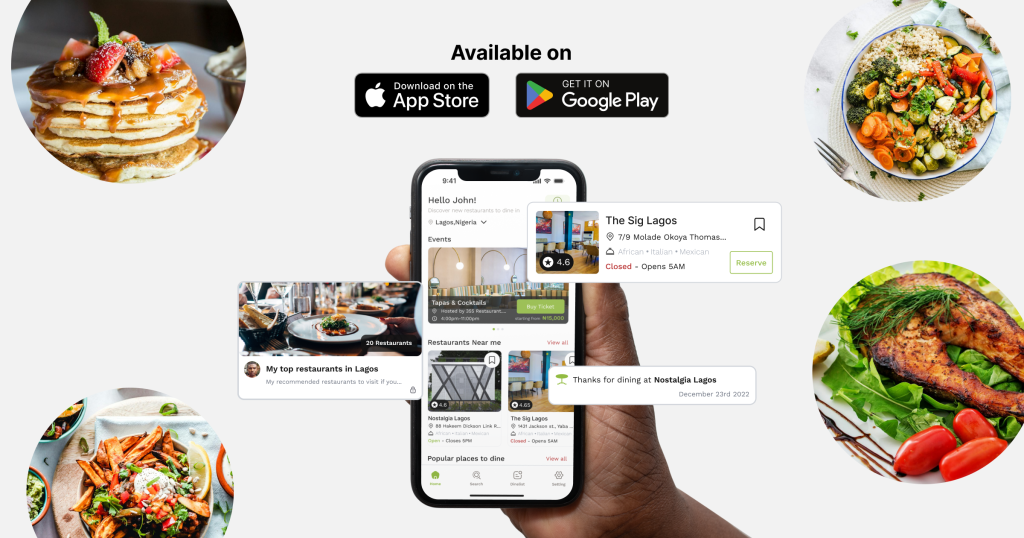
This matters more than it used to, because the restaurants pulling ahead in Lagos are the ones using technology to run a tighter, more guest-focused operation. When your team knows how to manage reservations smoothly, pull up a returning guest's history, or process a booking deposit without friction, service feels seamless to the guest. A platform like Dinesurf only delivers its full value when the team actually knows how to use it well, which is why system training belongs right alongside service training rather than as an afterthought.
One of the biggest mistakes is treating training as something that happens only when someone is hired. The best restaurants treat it as ongoing. Menus change, new staff join, standards slip without reinforcement, and guests' expectations keep rising. A team that trained once and never again slowly drifts.
This does not require shutting the restaurant for seminars. It can be as simple as a short pre-shift briefing to flag the day's specials and any issues, regular quick refreshers on service standards, and tasting sessions whenever the menu shifts. Little and often beats a single exhausting induction that everyone forgets within a fortnight. Over time these small, steady touches compound into a team that genuinely knows what it is doing.
It is also worth knowing that Nigeria has a formal structure for hospitality training through NIHOTOUR, the national body overseeing the sector's skills development. For restaurants that want to invest more seriously, aligning with recognised certification can raise both standards and staff pride, though plenty of excellent in-house training happens without it.
Here is the part that no training manual can replace. Skills can be taught, but motivation has to be nurtured, and a demoralised team delivers poorly no matter how well drilled. Staff who feel respected, fairly treated, and recognised for good work show up differently, and guests feel the difference immediately.
This is where training and retention meet. Recognising good performance, giving people room to grow, listening when they flag problems, and creating an environment where the job feels worth doing well: these are what keep your best people and make the effort you put into training actually pay off. The experts make this point repeatedly. Investing in staff well-being improves guest satisfaction and strengthens loyalty, both to the brand and among the team. You cannot train your way out of a workplace people dislike.
Building a team that delivers is not glamorous work. It is onboarding done properly, menu knowledge drilled until it is second nature, service standards coached patiently, systems learned thoroughly, and people treated like they matter. None of it is complicated. What it takes is the decision to treat staff training as central to the business rather than a chore to squeeze in later.
The restaurants in Lagos that make that decision end up with something their competitors cannot easily copy. Not a dish, which can be imitated, but a team that makes every guest feel looked after, every single time. In a city full of good food, that is what turns a first visit into a hundredth.
Dinesurf is the Guest Growth OS for hospitality brands across Africa.
We help restaurants, lounges, nightlife venues, and experience-led operators attract the right guests, convert demand into paid bookings, and turn first-time visits into repeat revenue, all from one connected system.
We are not just another restaurant software. We are the commercial growth layer built specifically for African hospitality — priced for this market, backed by a local team, and invested in the growth of the continent's dining culture.