Planning to eat well in Lagos? You have come to the right place. This guide covers the best restaurants in Lagos across seven neighbourhoods, from the upscale dining rooms of Victoria Island to the legendary buka spots of Surulere, so you always know exactly where to go and what to order.
Lagos does not ease you into it. The city hits you immediately: the noise, the energy, the traffic that has its own personality, and most importantly, the food. Everywhere you turn in this city, something is cooking. A pot of egusi bubbling somewhere on the mainland. A teppanyaki grill sizzling on Victoria Island. A suya mallam fanning coals on a roadside at 10pm like it is the most natural thing in the world.
If you live in Lagos, you already know that eating well here is both a privilege and a skill. You need to know where to go, what to order, and which neighbourhood matches your mood on any given day. Because Lagos does not have one dining scene. It has seven, at least.
This guide breaks them all down.
Victoria Island is Lagos showing off, and honestly, it earns the right to. This is where the city's finest restaurants sit, where the cocktails are crafted not poured, and where you will absolutely be judged for arriving in a wrinkled shirt on a Friday evening. If you are looking for the best restaurants in Lagos for a special occasion or an impressive first date, VI is where you start.
The crown jewel is NOK by Alara on Akin Olugbade Street, a Pan-African dining experience that genuinely competes with the best restaurants on the continent. The space is stunning, the menu is a love letter to African cuisine done with precision, and the portions are generous enough that you will not leave quietly calculating if the bill matched the hunger. Order the grilled fish and anything with the house pepper sauce.
For something with more energy and less formality, The Mayfair Lagos on Victoria Island blends African cuisine with live music and a rooftop lounge that makes Lagos feel impossibly beautiful at night. RSVP Restaurant on Eletu Ogabi brings New American dining with a Nigerian twist and a crowd that tends to know how to have a good time.
If you want world-class sushi and Asian fusion in Lagos, Shiro is the answer. It is the kind of place Lagosians take guests they want to impress without having to explain why.
The vibe: Dress well, arrive with a reservation, and budget accordingly. This is not the neighbourhood for spontaneous dining unless you enjoy standing outside waiting for a table.
What to eat: Pan-African cuisine, Asian fusion, sushi, contemporary Nigerian, cocktail-forward menus.
Ikoyi does not shout. That is part of what makes it special. The restaurants here tend to be more intimate, the ambiance more considered, and the crowd slightly more grown. This is where Lagos executives do long lunches and couples celebrate anniversaries without the noise of VI.
The Loft Ikoyi is one of the most consistently excellent dining experiences on the island, serving contemporary Nigerian and international cuisine in a space that feels genuinely curated. The food is inventive without being theatrical, and the service is the kind that makes you feel like the restaurant actually wanted you there.
For something more relaxed, 100 Hours offers good food at prices that do not require a budget meeting, which is refreshing for Ikoyi. Zolene Restaurant on Mekunwen Road brings authentic African flavours in a warm, unpretentious setting that feels like a neighbourhood secret even though it absolutely should not be.
Milk and Honey in Ikoyi has quietly become one of the most beloved coffee and brunch spots in Lagos. The waffles are not a rumour.
The vibe: Come here when you want a meal that feels intentional. Ikoyi dining rewards those who slow down.
What to eat: Contemporary Nigerian, international cuisine, brunch, African fusion.
Lekki is Lagos's most restless dining neighbourhood. New restaurants open here almost weekly, the crowd skews young and opinionated, and the food spans every mood and cuisine you could want on any given night.
788 On The Sea is the headline act. A waterfront restaurant with views that make you briefly forget you are in Lagos until the generator kicks in and reminds you warmly. The seafood is exceptional and the setting is one of the most genuinely beautiful dining experiences the city offers. Go at sunset if you can manage the traffic.
Zayda on Chief Collins Uchidiuno Street in Lekki Phase 1 is the kind of spot that earns its reputation through the food alone. Their signature Zayda Chef Special says everything about what this restaurant is about: flavoured seafood Chinese fried rice paired with grilled fish, grilled jumbo prawns, and pepper snail, all served with tartar sauce. It is a generous, confident plate that blends Asian technique with unmistakably Nigerian flavour sensibilities, and it is the dish you will be describing to someone else the next morning. If you are in Lekki Phase 1 and serious about seafood, this is a non-negotiable stop.
For everyday dining, Lekki has an embarrassment of good options across every price point, from solid pepper soup spots on Phase 1 to the growing number of contemporary cafes and brunch restaurants that fill up every Saturday morning without fail.
The vibe: Come hungry and stay flexible. Lekki will surprise you every time.
What to eat: Waterfront seafood, Nigerian cuisine, Asian fusion, brunch, pepper soup.
Lagos Island is where the city began, and the food here carries that history. If you are searching for authentic Lagos food at its most honest and most affordable, this is the neighbourhood that delivers. This is not the area for Instagram aesthetics. It is the neighbourhood for eating food that tastes like it was made by someone who has been cooking it for thirty years, because they probably have.
The bukas and local restaurants around Balogun Market and Broad Street serve some of the most flavourful amala, eba, and draw soup in the city. The portions are generous, the prices are honest, and the atmosphere is Lagos in its most unfiltered form. There are spots on Lagos Island where a full meal of eba and egusi runs between N700 and N2,000, and it will defeat anything you have eaten on the island for ten times the price.
For something slightly more structured, there are long-standing eateries around CMS and the Marina that have fed Lagos's commercial district for decades. They do not need to advertise because they have never had an empty table at lunchtime.
The vibe: Come for the food, not the ambiance. Lagos Island will feed your soul and your stomach simultaneously.
What to eat: Amala and ewedu, eba and egusi, draw soup, ofada rice, pepper soup, traditional Nigerian buka food.
If you are the kind of person who dismisses mainland dining, Surulere exists specifically to humble you. This neighbourhood is where Lagos eats the way Lagos actually eats, without performance, without overpriced cocktails, and without a dress code that makes you feel bad about your Monday. For anyone compiling a serious list of the best places to eat in Lagos, leaving out Surulere is a mistake.
If you have never eaten amala and ewedu done properly in Lagos, this is where the education begins. The amala is exactly what it should be, the ewedu has the right draw, and the assorted meats are non-negotiable as additions. This is a meal that Lagosians genuinely argue about, and they are right to take it seriously.
Ofadaboy on Mba Street brings ofada rice and ayamase stew into a space that actually respects the dish. The wooden decor, the palm wine, the fried plantain on the side: it is Yoruba food culture presented with intention.
Rubels and Angels on Ogunlana Drive offers a livelier atmosphere with solid continental and Nigerian options, and the kind of crowd energy that makes a midweek dinner feel like a Friday.
The suya spots that set up along major Surulere streets from evening onwards deserve their own paragraph. Fresh, hot, heavily spiced beef on skewers with sliced onions and tomatoes, wrapped in newspaper, eaten standing by the roadside. This is one of Lagos's true pleasures and it costs less than your last coffee.
The vibe: Come with appetite, come with cash or transfer ready, and come without snobbery. Surulere will repay all of that generously.
What to eat: Amala and ewedu, ofada rice and ayamase, suya, pepper soup, Nigerian buka staples.
Yaba is Lagos's tech and creative hub, and the food scene reflects the neighbourhood's personality: experimental, affordable, and increasingly interesting. For young professionals and students looking for good food in Lagos without spending a fortune, Yaba is genuinely one of the best options on the mainland.
The crowd here is younger, the concepts are fresher, and the restaurants tend to have a point of view beyond just serving food. The area around Herbert Macaulay Way and the Yaba tech cluster has seen a genuine dining evolution over the past few years. Good cafes, fusion spots, and creative eateries have settled alongside the older buka culture that never left. You can eat an excellent breakfast burrito and then walk three minutes to a spot serving the best ogi and akara of your life.
Yaba offers some of the best value-for-money dining in Lagos. The food is honest, the portions are real, and the energy of the neighbourhood gives even a casual lunch a certain liveliness.
The vibe: Come here to discover something new. Yaba is still writing its food story and that makes it worth paying attention to.
What to eat: Fusion cafes, ogi and akara, creative brunch spots, affordable Nigerian staples.
Ikeja is Lagos State's capital and the city's airport gateway, which means it feeds a constant stream of business travelers, corporate teams, families, and everyone passing through. The food here is reliable, varied, and priced at a level that does not require a special occasion to justify. For anyone asking where to eat in Lagos near the airport or the GRA, Ikeja is the answer.
Allen Avenue and Toyin Street are the twin food corridors of Ikeja. You will find everything from Lebanese shawarma to solid Nigerian restaurants to hotel dining rooms that punch above their weight. The GRA has some of the quieter, better-quality restaurants in the neighbourhood, suited to the long lunch or the relaxed dinner after a day of meetings.
The perception that you have to cross to the island for good food is one that Ikeja has been quietly disproving for years.
Rhodes BBQ is a standout for anyone who wants fine dining on the mainland done with confidence. The smoked chicken and guinea fowl are the right orders.
The vibe: Reliable, accessible, and consistently good. Ikeja is the neighbourhood that quietly gets on with it.
What to eat: Nigerian cuisine, continental dining, hotel restaurants, Lebanese, smoked meats.
No guide captures Lagos dining completely because the city changes faster than any guide can keep up with. The restaurant that was the talk of the town six months ago may have transformed entirely by the time you read this. New spots open constantly. Hidden gems get discovered and lose their mystery.
The best approach to eating in Lagos is the one Lagosians have always used: stay curious, ask the person next to you where they last had a great meal, follow the crowds at lunchtime, and never fully trust a restaurant that does not have a queue on a Saturday.
The food on this continent is extraordinary. And Lagos, chaotic and brilliant as it is, might just be its finest stage.
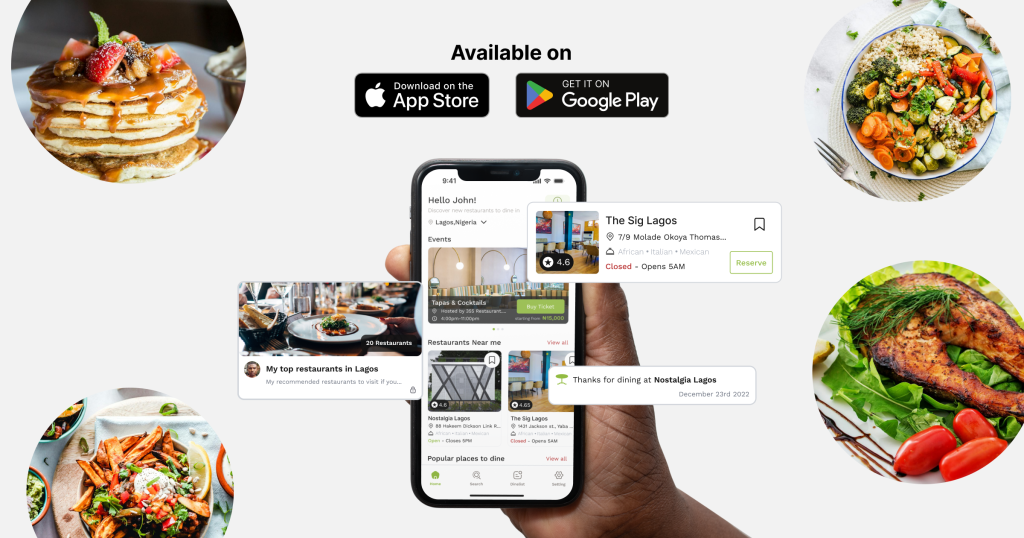
Looking for a table at any of the restaurants in this guide? Browse and book directly on Dinesurf.
Dinesurf is the Guest Growth OS for hospitality brands across Africa.
We help restaurants, lounges, nightlife venues, and experience-led operators attract the right guests, convert demand into paid bookings, and turn first-time visits into repeat revenue — all from one connected system.
We are not just another restaurant software. We are the commercial growth layer built specifically for African hospitality — priced for this market, backed by a local team, and invested in the growth of the continent's dining culture.